
A medical ambition deserves more than a brochure
MBBS in Russia for Indian students.
“MBBS in Russia” is commonly used by Indian applicants to describe a Russian primary medical qualification. The actual university award may be a Specialist qualification in General Medicine, rather than a degree literally titled MBBS. Confirm the programme code, award, language and professional rights attached to your exact course. [2] [7]
Russia offers a range of medical-study settings, from large metropolitan universities to regional institutions. The right choice depends on documented teaching, clinical exposure, total cost and the licensing pathway—not an undated ranking or a blanket claim of international approval.
| At a glance | What to verify |
|---|---|
| Duration | The reviewed Kazan State Medical University and RUDN General Medicine examples are six-year programmes. A six-year label alone does not prove a separate compliant 12-month internship. |
| Teaching language | English, Russian and intermediary-language descriptions differ. Obtain written confirmation of the medium across the complete course and training. |
| Entry route | University admission rules and entrance tests are separate from Indian NEET qualification. Quota/scholarship routes have their own process. |
| Published tuition | Kazan State Medical University lists RUB 636,000 per academic year for its 2026 English General Medicine entrants; Pirogov publishes a separate 2026–27 fee reference. |
| Clinical communication | Plan Russian-language learning for patient interaction, even when the academic programme is described as English-taught. |
| Recognition and practice | Check the exact course, local licensing/accreditation pathway and India’s applicable foreign-graduate requirements independently. |
Compare learning environments
Ask about clinical supervision, patient contact, assessment and support—not only campus size or rankings.
Compare the complete cost
Tuition, housing, daily living, insurance, travel and post-degree requirements all affect the decision.
Verify before committing
Use official university contacts, authentic documents and a written contract with clear refund terms.
A clearer directory—not an unverified ranking
Russian medical-university profiles to research.
All 17 entries from the original collection are retained, but they are not 17 independently verified medical options: one Moscow link is repeated, and three technical-university profiles are marked as other study references. Check each exact programme and campus before shortlisting. [16]
Kazan State Medical University
Publishes a six-year General Medicine route in English and a 2026–27 foreign-student fee schedule. This is not Kazan Federal University, which was also named in the original overview.
Read the official fee schedule ↗Pirogov University, Moscow
Publishes university entrance requirements and an additional-intake timeline. Its “intermediary language (English)” wording needs a full-course medium check—not an assumed NMC endorsement.
Review the official admission route ↗17 of 17 original entries
Reconfirm General Medicine route, language and campusMedical-study profile · verify programmePerm State Medical UniversityPerm
Reconfirm General Medicine route, language and campusMedical-study profile · verify programmeStavropol State Medical UniversityStavropol
Reconfirm General Medicine route, language and campusMedical-study profile · verify programmeKabardino-Balkarian State UniversityNalchik
Reconfirm General Medicine route, language and campusMedical-study profile · verify programmeFirst Moscow medical profile · ambiguous original labelMoscow · same destination as entry 10
Same original URL appears twice; not two separate universitiesMedical-study profile · verify programmeSamara State Medical UniversitySamara
Reconfirm General Medicine route, language and campusMedical-study profile · verify programmeAltai State Medical UniversityBarnaul
Reconfirm General Medicine route, language and campusMedical-study profile · verify programmeDagestan State Medical UniversityMakhachkala
Reconfirm General Medicine route, language and campusMedical-study profile · verify programmePirogov Russian National Research Medical UniversityMoscow
Reconfirm General Medicine route, language and campusMedical-study profile · verify programmeFirst Moscow State Medical University · repeated profileMoscow · same destination as entry 5
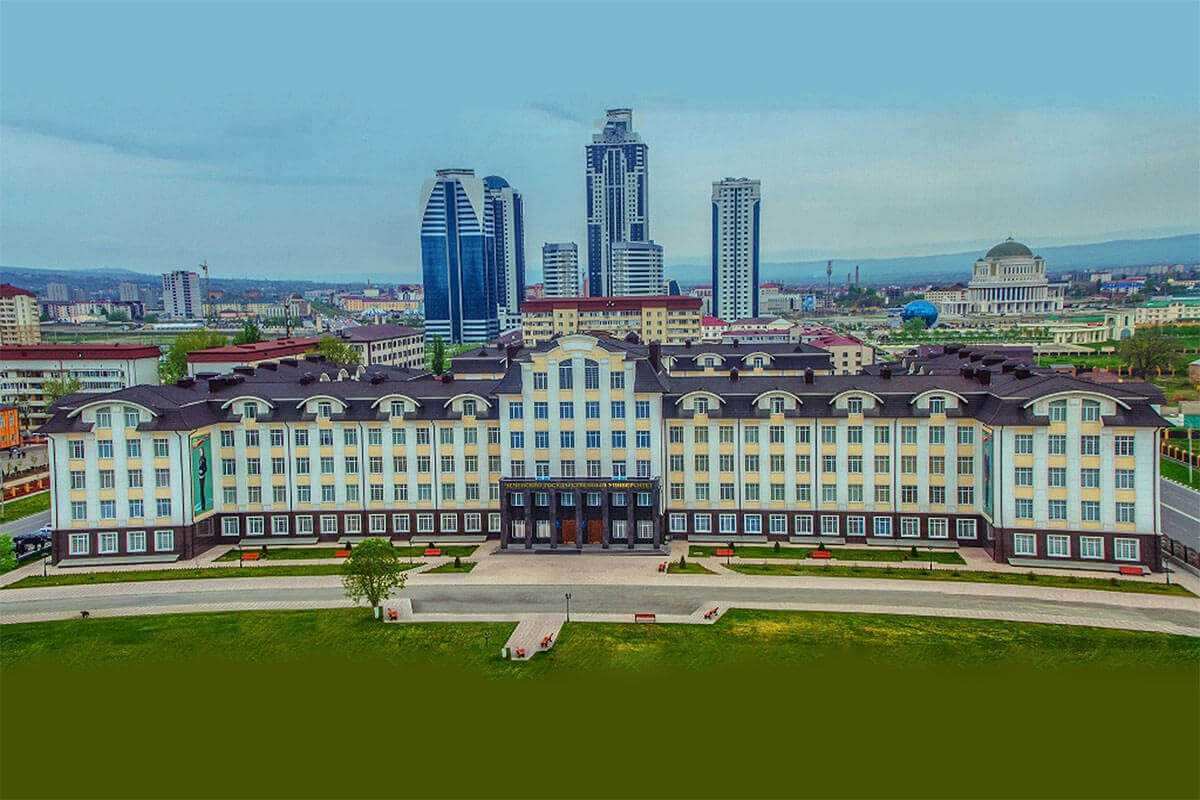
Same original URL appears twice; not two separate universitiesMedical-study profile · verify programmeChechen State UniversityGrozny
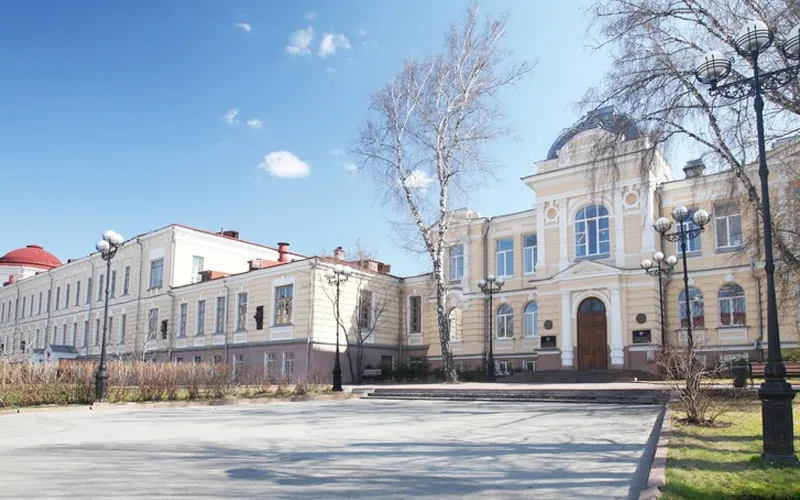
Reconfirm General Medicine route, language and campusMedical-study profile · verify programmeSiberian State Medical UniversityTomsk
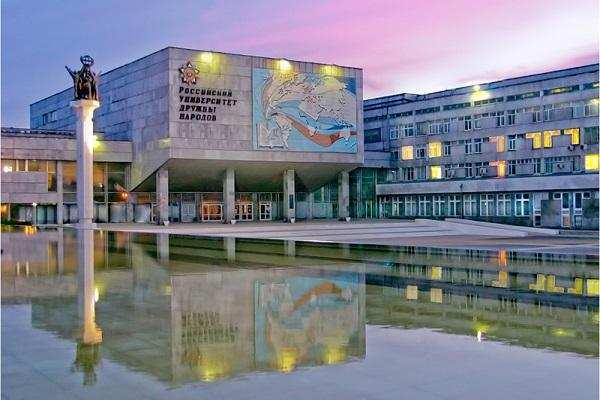
Reconfirm General Medicine route, language and campusMedical-study profile · verify programmePeoples’ Friendship University of Russia (RUDN)Moscow
Reconfirm General Medicine route, language and campusOther study referenceRybinsk State Aviation Technical UniversityRybinsk · aviation / technical profile
Retained reference · no General Medicine route verified hereOther study referenceGrozny State Oil Technical UniversityGrozny · oil / technical profile
Retained reference · no General Medicine route verified hereMedical-study profile · verify programmeTula State UniversityTula
Reconfirm General Medicine route, language and campusOther study referenceTomsk Polytechnic UniversityTomsk · polytechnic profile
Retained reference · no General Medicine route verified here
No matching original profile. Try another name, change the filter or reset. Kazan appears in the featured official example above, not in this original directory.
Other institutions named in the original overview include Lomonosov Moscow State University, Sechenov University, Kazan Federal University, Novosibirsk State University and St. Petersburg State University. Their mention is not an endorsement of a current English General Medicine course, scholarship, ranking or India-compliant internship.
- Verify the exact award, university, medical faculty, campus and current programme permission.
- Request the complete language and clinical/internship plan for international students.
- Check recent institute-specific outcomes with exam year and candidate numbers, rather than an unsupported ranking.
- Contact the university directly to verify offers, fees, representative authority and payment recipients.
Meet Indian conditions and the university’s own rules
MBBS in Russia eligibility & NEET.
| Check | What it means |
|---|---|
| Indian NEET requirement [10] | Covered Indian/OCI applicants must qualify NEET. NMC treats the qualifying result as the eligibility certificate subject to underlying Indian eligibility conditions, with three-year validity from declaration for the relevant foreign medical-study purpose. |
| School subjects, marks and age | Check the applicable Indian medical/NEET academic, subject, category and age conditions. Separately confirm how the Russian university accepts your school qualification and entrance results; an Indian category concession is not automatically a Russian admission concession. |
| University entrance process [4] [6] | NEET is not a universal substitute for university examinations. Pirogov’s reviewed Practical Medicine route specifies Chemistry and Biology in English, minimum 56/100 in each; those are its test scores, not a school-PCB or NEET cutoff. |
| Language | Obtain written confirmation of English as the medium throughout the applicable course/training. Do not assume an English website or an English entrance test proves this. |
| Clinical training and local licence | Establish the actual internship/training and local professional-registration pathway, including requirements applicable to foreign nationals. |
| Programme fit | General Medicine, Dentistry, Pharmacy, Medical Biochemistry and Nursing are not interchangeable medical qualifications. Check the exact programme code and intended professional outcome. |
Check what to verify next
A planning aid for new Indian/OCI applicants—not a university eligibility certificate, legal assessment or NMC approval. Your answers are declarations, not verified documents.
Inputs stay in this page and are not saved or transmitted. A positive selection does not verify the course, grade equivalence, age, admission status or right to register.
University-specific dates—not a universal February intake
Russia medical admission process & 2026 dates.
Choose the university, exact General Medicine track, teaching language and funding route before applying. Self-financed entry and government-quota selection can use different calendars and procedures. Do not assume every medical university offers both September and February admission. [4] [8]
Published application deadline
7 October 2026Until 17:00 Moscow time for fee-paying foreign-document applicants taking university entrance exams. Check your programme’s availability and later notices. [5] [17]
Reviewed 28 September 2026 · not a seat guaranteePublished main application window
20 June–15 July 2026These main undergraduate/specialist dates have passed. Additional recruitment depends on vacancies and separate university notices; do not assume it is open. [2]
Not a national Russian application calendarPirogov’s published additional-intake sequence: entrance exams 9–13 October, ranking lists 14 October, tuition contracts 15–21 October and enrollment orders 22 October 2026. These are university-specific scheduled stages, not a promise of selection, visa issuance or immediate arrival. [5]
| Step | Action |
|---|---|
| 1 · Verify the course and intended practice country | Confirm award, duration, medium, required subjects, clinical/internship structure and local licensing eligibility before selecting a university. |
| 2 · Prepare accepted documents | Check school-record recognition/legalisation, certified Russian translations, passport details and Indian NEET evidence. |
| 3 · Apply through an official route | Use the current university admissions page or the relevant government-quota process. Keep control of your application account. |
| 4 · Complete entrance requirements | Follow the programme-specific tests/interviews, deadlines and merit process. Minimum test scores do not reserve a seat. |
| 5 · Review the tuition contract and enrollment order | Verify fees, instalments, included services, refund rules and authorised payment recipients; keep receipts. |
| 6 · Obtain the study invitation and visa | Follow the appropriate invitation/consular route and university reporting instructions. Allow time for migration formalities and arrival support. |
Current published references. Transparent future assumptions.
MBBS in Russia fees, living costs & budget.
Compare the same admission year, applicant category, course and fee period. A lower domestic/CIS tariff, a one-semester payment or a foundation-course price should not be advertised as the annual cost of an Indian applicant’s English General Medicine programme.
| University / exact reference | Published 2026–27 tuition | Important limit |
|---|---|---|
| Kazan State Medical University [1] | RUB 636,000 per academic year | General Medicine in English, six-year programme, 2026 entrants. Not Kazan Federal University; later-year prices and extras need a written contract. |
| Pirogov University [3] | RUB 1,200,000 in the 2026–27 fee table | General Medicine, Practical Medicine profile, described as using an intermediary language (English). Confirm annual billing, full-course medium and training requirements. |
Living costs: plan for your actual city and accommodation
The official Study in Russia portal gives a general student estimate of RUB 24,300–32,400 per month, while explicitly noting regional and personal variation. This is not a guaranteed Moscow medical-student budget or a fixed hostel tariff. [8]
| Cost to check | What to include |
|---|---|
| Housing and meals | Dormitory availability, room type, utilities, food, deposits and housing during holidays/clinical periods. Do not count housing twice if a quote already includes it. |
| Academic and administrative charges | Insurance, medical examinations, document recognition/translation, migration formalities, equipment, exam repeats and any internship-related costs. |
| Travel and climate | Flights, local transport, winter clothing and an emergency return-travel reserve. |
| Payments and contingencies | Confirm a lawful usable remittance/payment channel with your bank and university, exchange spreads, transfer charges and receipt arrangements. |
| After graduation | Allow for the applicable Indian examination, internship, registration and associated living costs; these are not automatically included in a six-year Russia budget. |
Build a six-year—or custom-period—budget
All monetary cost fields use one selected currency. Start with the Kazan State Medical University annual-fee reference, then edit the tuition basis, years, increases, living costs and INR conversion rate.
Starting tuition uses KSMU’s 2026–27 RUB 636,000 annual reference. Holding it unchanged for six years is an assumption, not a price promise. RUB 28,000/month, RUB 150,000 other costs, 10% reserve and ₹1.10/RUB are illustrative. Seventy-two months models a six-year Russia stay; preparatory study or additional training and the later Indian pathway are not automatically included.
Calculation: annual-basis tuition = sum of starting tuition × (1 + annual increase) raised to year 0, 1, …; full-period tuition = your entered total once. Add months × monthly living + other costs, then the reserve, then convert to INR. Changing tuition years resets living months to 12 × years; edit months afterwards if needed. Currency changes clear financial amounts and the old conversion rate. Changing tuition basis clears the tuition amount to prevent double-counting. No live rates, loan interest, salary, scholarship, stipend or unentered costs are assumed.
Look at the curriculum—and the training evidence
General Medicine duration, subjects & clinical learning.
General Medicine combines biomedical science, clinical knowledge and supervised practical learning. The reviewed RUDN example describes practice distributed across the course and a subsequent state primary accreditation step. That page is explicitly its Russian-language route; it illustrates structure, not an English-medium recommendation for Indian registration. [7]
Biomedical foundations
Illustrative learning stage—not a fixed national year split.
- Anatomy, physiology, biochemistry, histology and medical biology build the scientific base.
- Ask about laboratory work, assessment, teaching language and support during transition to university.
Clinical science and diagnosis
Check the detailed curriculum of your chosen programme.
- Pathology, microbiology, pharmacology and clinical examination support diagnostic reasoning.
- Communication, medical ethics, record keeping and supervised patient contact should develop alongside knowledge.
Supervised clinical practice
Clinical placements are not automatically the NMC-required internship.
- Medicine, surgery, obstetrics/gynaecology, paediatrics and allied areas involve programme-specific rotations and assessments.
- Get the schedule, supervision, duration, attendance and certification of each practical component in writing.
Graduation and professional entry
The degree and permission to practise are separate.
- The reviewed RUDN programme describes state primary accreditation after the General Medicine diploma for local professional progression.
- Confirm all local requirements for your nationality and the distinct Indian examination/internship/registration pathway.
Russian-language learning for daily life and patient interaction is valuable, but it does not replace the applicable requirement for English as the medium of instruction. Obtain course-wide written evidence rather than assuming all years are English because admission materials are in English.
Six years is a duration—not an NMC approval certificate
Recognition, internship & practising in India.
| Term / body | What it does—and does not—establish |
|---|---|
| India’s National Medical Commission [10] | NMC states that it does not endorse a list of foreign medical universities. A country/university label is not automatic Indian registration approval. |
| Russian university / programme status | Verify the exact recognised programme, award, campus and professional progression route. University admission does not, by itself, prove the local licence condition. |
| WDOMS and WHO/UNESCO labels [14] | A World Directory listing alone is not recognition, accreditation or endorsement. Do not treat WHO/UNESCO wording in a brochure as a universal medical-practice licence. |
| Local professional accreditation [7] | The reviewed RUDN example describes state primary accreditation after graduation. Confirm the actual requirements and right to practise applicable to your nationality. |
| NBEMS / Indian assessment [13] | Follow current examination bulletins, applicable internship and registration rules. Exam availability is not approval of every foreign course. |
Verify the applicable FMGL framework before paying.
For the applicable 2021-regulations cohort, requirements include at least 54 months of medical education plus a 12-month internship at the same foreign institution, English instruction, required subjects and the host-country registration/licensing condition at par with citizens. Same-institution/country and completion-time conditions also apply. [11]
The Indian pathway additionally includes the prescribed examination, at least 12 months of supervised internship in India for the applicable cohort, and the required registration process. Do not assume the foreign and Indian internships substitute for each other. [11]
Before committing, obtain the full curriculum, medium statement, practical/internship plan and documentary route to local registration. Retain records throughout the course. No checker on this page certifies that any named university meets every condition for your case.
A scholarship needs an award letter—not a generic promise
Government quota, scholarships & financing.
The official Study in Russia guidance describes a competitive Russian Government quota route through Education in Russia ↗. University-level support may also exist under separate rules. Programme, nationality, language, selection and deadline conditions must all be checked. [8]
Verify the funded programme
Confirm that General Medicine at the intended university and language is actually covered. A funded Russian-language place may not fit an Indian applicant’s English-medium requirement.
Confirm exactly what is paid
Distinguish tuition support, stipend eligibility, dormitory availability and accommodation charges. A guaranteed dormitory place is not automatically a free room.
Plan beyond the award
Budget travel, insurance, winter clothing, personal costs and the later licensing pathway. Do not assume a scholarship or job will cover an unfunded gap.
For loans, compare interest, margin contribution, security, disbursement, remittance and repayment conditions. The calculator does not assess loan eligibility or deduct an unconfirmed scholarship, stipend or earnings.
Prepare authentic records and verify the exact checklist
Documents for admission, visa & registration.
| Purpose | Records and checks |
|---|---|
| Academic admission | School certificates and marksheets/transcripts, accepted science subjects, application and programme-specific recognition/equivalence documents. |
| Indian medical conditions | NEET qualification result and declaration date; evidence of underlying Indian academic, age and category requirements. |
| Identity and translation | Valid passport with the required remaining validity, photographs to the current specification and accepted Russian translations/notarisation. Match names across records. |
| Offer and financial evidence | Official offer/admission records, tuition contract, authorised payment receipts, funding evidence and the appropriate invitation documentation. |
| Health and insurance | Current mission/university-required medical and HIV-related certificates where applicable; appropriate health insurance. Confirm recency and testing requirements rather than using an old universal checklist. |
| Arrival and lawful stay | Visa, migration/registration documents and applicable medical examination/fingerprinting formalities. Follow the university migration office’s instructions and renew on time. |
| Long-term professional evidence | Curriculum, course-wide medium statement, transcripts, attendance/clinical records, internship documentation, travel records and host-country licensing evidence. |
KSMU’s reviewed admission page includes specific translation, Indian NEET and arrival requirements; Pirogov provides a separate invitation/migration workflow. Requirements can differ by route and institution. Confirm the competent consulate’s current passport, photograph, health-document and fee requirements before submitting. [2] [9]
Country conditions and practical arrangements matter
Student visa, safety, payments & life in Russia.
For an Indian student’s long-term degree, follow the appropriate study-invitation and student-visa route, not an assumption that a tourist permission or short-stay e-visa covers the course. Pirogov distinguishes government-quota invitations from invitations issued after its own university-exam enrollment route. [9]
The official Study in Russia guide describes arrival registration, insurance, medical and fingerprinting documentation. Ask the university’s migration office for the precise requirements, sequence and deadlines for your case. No universal visa price or processing-time guarantee is stated here. [8]
Review current safety advice
Check current Russia/region-specific MEA and Indian mission notices, university alerts, travel routes and emergency plans. A national “safe country” slogan is not enough.
Verify payments in advance
Ask your bank and university which lawful payment/remittance arrangements currently work, including charges, exchange conversion and refunds. Do not assume every international card will work.
Plan for the actual city
Budget winter clothing, heating, food, insurance, local transport and housing during clinical periods. Learn practical Russian and keep emergency contacts accessible.
Important safeguards: keep your passport under your control, verify any work offer independently, and do not sign documents you cannot understand. Maintain an emergency travel reserve and a reliable way to contact family and the Indian mission. Check current MEA advisories ↗
Think beyond admission—and beyond the first year
After the degree: careers & your planning checklist.
A primary medical qualification is a stage in a regulated career, not a guaranteed specialist job. Practising in Russia, returning to India, entering residency or moving to another country each involves separate professional and, where relevant, immigration requirements.
| Possible direction | What must come next |
|---|---|
| Medical practice in India | Applicable screening/exit assessment, prescribed internship and registration conditions; course/cohort compliance remains essential. |
| Medical practice or residency in Russia | Required local accreditation/registration, appropriate Russian communication skills and applicable work/stay conditions. The degree alone is not the entire process. |
| Specialist or surgical career | Additional recognised postgraduate training and specialist requirements; an undergraduate degree does not automatically qualify you as a specialist. |
| Research, public health or academic work | Programme- or employer-specific further qualifications, experience and selection. No salary or placement is guaranteed. |
0 of 6 planning steps completed
The checklist stays in this page and is not saved or submitted.
Questions worth asking before you pay
MBBS in Russia: FAQs.
Is the Russian degree literally called MBBS?
“MBBS in Russia” is a common Indian search term. The reviewed General Medicine examples use the Russian Specialist qualification framework. Confirm the exact award and its professional implications rather than assuming an automatic Indian equivalence from the title. [2] [7]
How long is General Medicine in Russia?
The reviewed KSMU and RUDN examples are six-year programmes. Preparatory language study, repeats, additional required training and the Indian licensing pathway may add time and cost. [2] [7]
Does six years automatically include an NMC-compliant internship?
No. Obtain documentary evidence of the actual foreign internship at the same institution and all other applicable conditions. Distributed clinical placements or a “5 + 1” brochure description are not, by themselves, proof. [11]
Is NEET compulsory, and is it the only exam?
Qualifying NEET is required for covered Indian/OCI applicants, subject to underlying Indian conditions. Russian universities may also require their own tests. Pirogov’s reviewed English-intermediary Practical Medicine route lists Chemistry and Biology entrance tests. [10] [6]
How long is NEET valid for foreign medical study?
NMC’s student-abroad guidance states three years from declaration of the result for the relevant foreign medical-study purpose, subject to underlying conditions. Check your own result date and route before admission. [10]
Are all six years taught in English?
Do not assume so. Verify lectures, practical/clinical teaching, assessments and training across the full course in writing. “Intermediary language (English),” bilingual and Russian-language descriptions need careful clarification. Russian patient communication remains important.
What are the published 2026–27 fee examples?
Kazan State Medical University lists English General Medicine at RUB 636,000 per academic year for 2026 entrants. Pirogov’s 2026–27 table lists RUB 1,200,000 for its Practical Medicine intermediary-language route. Confirm billing period, future years and extras; these are not all-inclusive national prices. [1] [3]
Is the calculator a guaranteed six-year quote?
No. It projects the period you enter using explicit annual increases, living assumptions, reserve and a manually entered exchange rate. The default 0% tuition increase is an assumption, not a future-fee promise. No live rates or unentered post-degree costs are included.
Do all universities offer a February intake?
No universal February intake is established here. Read the chosen programme’s official calendar. Preparatory-course start dates and additional rounds should not be confused with a new General Medicine intake.
What is the reviewed Pirogov additional-intake deadline?
The published deadline is 7 October 2026 at 17:00 Moscow time for the specified fee-paying foreign-document applicants taking university entrance exams. Exams are scheduled for 9–13 October. Recheck programme availability and later notices. [5] [17]
Are Russian universities NMC-, WHO- or UNESCO-approved for worldwide practice?
No blanket claim should be made. India’s NMC does not endorse a foreign-college list, and WDOMS listing alone is not accreditation or endorsement. Every destination has its own professional requirements. [10] [14]
Can a scholarship cover the entire course and all living costs?
Only the written award terms establish coverage. The official government-quota route is competitive. A dormitory place, tuition support and stipend are separate benefits; confirm programme language, additional costs and Indian medical requirements. [8]
Are the technical-university links medical recommendations?
No. Rybinsk State Aviation Technical University, Grozny State Oil Technical University and Tomsk Polytechnic University are retained as other study references from the original page, not verified General Medicine routes. The directory also identifies the duplicate First Moscow URL.
Can I practise in India immediately after graduating?
Not automatically. Your course and cohort must meet the applicable foreign-graduate, examination, internship and registration conditions. Do not assume NExT has universally replaced FMGE or that a degree/exam pass alone completes every step. [11] [12] [13]
What should I check for visa, payments and safety?
Use the correct study invitation and consular route; confirm migration/health/insurance requirements, current lawful bank/payment arrangements and official regional travel advice. No fixed visa charge, guaranteed timeline or universal safety assurance is given. [8] [9] [15]
Does counseling or this checker guarantee admission?
No. The checker is local planning guidance. The counseling button opens the existing Search My Colleges enquiry form; universities, visa authorities and medical regulators make their own decisions.
Know which institution, year and rule a claim refers to
Sources & editorial review notes.
Reviewed 28 September 2026. University notices, signed offers and regulator decisions take precedence. Fee references are not future-price promises; dates are not a live seat feed; calculators and profile links do not certify medical-registration compliance.
- Kazan State Medical University — foreign fees for 2026–27 ↗
Official fee page for 2026 entrants lists six-year General Medicine, including its English-language route, at RUB 636,000 per academic year. The separate lower CIS/Russian-language tariff is not applied to Indian applicants. Later years, housing and other charges must be confirmed.
- Kazan State Medical University — foreign admissions ↗
Lists six-year General Medicine in Russian or English, documents including Indian NEET results, translations/recognition, and main undergraduate/specialist application dates 20 June–15 July 2026. Additional intake depends on vacancies and separate notices. Those main dates have passed at review.
- Pirogov University — published 2026–27 tuition ↗
Lists RUB 1,200,000 for General Medicine, Practical Medicine profile, in its 2026–27 table under “Programs using an intermediary language (English).” Preserve that exact description and obtain full-course medium/internship evidence; do not treat the fee listing as Indian regulatory approval.
- Pirogov University — how to apply ↗
Official English site is linked from rsmu.ru. Covers programme choice, secondary education, university entrance exams, state-quota routes, documents, tuition contract and enrollment order. Also warns of fake application websites. Use the admissions page to reach current official application links.
- Pirogov — additional-intake timeline, 2026 ↗
Fee-paying foreign-education-document applicants taking university exams: applications 1 September–7 October 2026, deadline 17:00 Moscow time; exams 9–13 October; ranking lists 14 October; contracts 15–21 October; enrollment orders 22 October. University-specific, subject to current programme availability and later notices.
- Pirogov — 2026 entrance tests and minimum scores ↗
The Practical Medicine intermediary-language route specifies Chemistry and Biology in English, each with a minimum 56 points out of 100. These are university-test scores, not NEET marks or school-PCB percentages; minimum scores do not guarantee a place.
- RUDN — six-year General Medicine programme example ↗
This particular official page is explicitly the RUSSIAN-language Specialist route. Used only to explain duration, staged clinical practice and the stated state primary accreditation step after graduation—not to recommend it as English-medium or certify Indian eligibility.
- Study in Russia — official education and arrival guidance ↗
Official Ministry of Science and Higher Education resource. Describes university-specific entry tests, government quota via education-in-russia.com, invitations, migration/insurance/medical formalities and funding. General living-cost guide at review: RUB 24,300–32,400/month, varying by region and personal needs; not a medical-course or city-specific guarantee.
- Pirogov — invitation and migration support ↗
Distinguishes invitations for government-quota candidates and university-exam entrants. Provides university visa/migration contacts and current checklists. A university offer is not itself a study visa; check the competent Russian consulate’s current requirements separately.
- NMC — For Students to Study Abroad ↗
NMC does not endorse a list of foreign medical universities. Indian citizens/OCIs intending to obtain a primary medical qualification abroad from May 2018 must qualify NEET; the qualifying result is deemed the eligibility certificate subject to the underlying conditions, and is valid for three years from the result date for this purpose.
- NMC — Foreign Medical Graduate Licentiate Regulations, 2021 ↗
For the applicable cohort: minimum 54 months of medical education, 12-month internship at the same foreign institution, English instruction, required subjects, local registration/licensing condition at par with citizens, at least 12 months supervised internship in India and the mandated test. Foreign course/training/internship location and completion-time conditions also apply; earlier cohorts and notified exemptions need separate review.
- NMC — Foreign medical graduate FAQs, 8 June 2026 ↗
Clarifies pandemic/war-related compensatory physical training and the 18 March 2026 notice. Does not create a general new exemption. Earlier-cohort internship/registration cases require State Medical Council verification; a compensation certificate is not automatic registration.
- NBEMS — FMGE examination portal ↗
Official screening-test information, current bulletins and institute-wise performance reports. FMGE material is still published at review; this guide does not claim that NExT has universally replaced it or forecast the exam applicable at a future graduation date.
- World Directory of Medical Schools — About ↗
Explicitly states that a directory listing is not, by itself, recognition, accreditation or endorsement by WDOMS, WFME, FAIMER or its sponsors. Check the exact school/programme record and relevant regulator requirements.
- MEA — Travel Advisories ↗
Official travel-advisory entry point. Consult the current country/region notice and Indian mission guidance before paying or travelling. Inclusion of a destination in this guide is not a safety clearance.
- Original Search My Colleges Russia page ↗
- Pirogov — additional-intake programme list ↗
Includes General Medicine, Practical Medicine, using an intermediary language in the additional-intake list. Published allocation figures are a snapshot, not a live seat counter or reserved place for a particular applicant.
Educational planning information only—not an official eligibility, medical-registration, legal, immigration, financial or safety determination. No admission, scholarship, job, visa or licence is guaranteed.