Mechanical Engineering 2026: Ultimate Course Guide, Admission, Fees & Career
At the nexus of creativity, science and technology, mechanical engineering is a broad and dynamic field. It includes the creation, examination and production of mechanical devices and systems that drive the contemporary world. Mechanical engineers work in a variety of fields, such as automotive, aerospace, energy and biomedical engineering, where they apply the concepts of physics, mathematics and material science to solve challenging issues and develop novel solutions.
Mechanical Engineering Course: Fees, Top Colleges & Placement Guide 2026
Mechanical Engineering courses after 12th provide the students with detailed knowledge of the foundational aspects of research, design, manufacturing, and testing of mechanical systems, equipment, and machinery. Mechanical Engineering strongly emphasizes the construction of machinery, engines, and tools to ensure the effective functionality of mechanical system designs. Alongside theoretical knowledge, Mechanical Engineering courses provide hands-on experience through lab work, workshops, and industrial projects.
Key Aspects of Mechanical Engineering Courses:
- Specializations: Automobile Engineering, Aerospace Engineering, Robotics Engineering, Manufacturing Engineering, Thermal Engineering, etc.
- Top Course Options:Â BTech Mechanical Engineering, MTech Mechanical Engineering, Diploma in Mechanical Engineering, and PhD in Mechanical Engineering.
- Curriculum Focus: Solid and Fluid Mechanics, Manufacturing Technology, Machine Design, Thermodynamics, and Control Systems.
- Essential Skills: Manufacturing, Structural Analysis, CAD Software Proficiency, Mechanical System Analysis, etc.
- Top Colleges: Top IITs, NITs, VIT Vellore, DTU, BITS Pilani, SRM Institute of Science and Technology, etc.
- Career Opportunities: Mechanical Design Engineer, Manufacturing Engineer, Product Engineer, Power Plant Engineer, etc.
- Industrial Applications: Manufacturing, Robotics, HVAC, Power Generation, Aerospace, Transportation, Healthcare, etc.
- Average Starting Salary: INR 5 LPA – INR 7 LPA
To know more about Mechanical Engineering courses after 12th, read the article below.
The Mechanical Engineering admission in India involves both Class 12 merit and entrance exam scores. Mechanical Engineering courses after 12th are intended to teach students about the planning, design, building, and testing of various mechanical equipment, systems, and machinery. There are various Mechanical Engineering specializations for students to pursue, including Robotics Engineering, Mechatronics Engineering, Thermal Engineering, Aerospace Engineering, and Nanotechnology.
The general Mechanical Engineering admission eligibility criteria for UG courses require students to complete Class 12 in the Science stream with a minimum of 50 to 60 percent marks in Physics, Chemistry, and Mathematics subjects. For PG courses, students must hold a bachelor’s degree in the same or a related field with at least 55 percent marks. Some prominent Mechanical Engineering entrance exams in India for admission to the B Tech Mechanical Engineering course include JEE Main and JEE Advanced, TNEA Counselling, MHT CET, KCET, AP EAMCET, and COMEDK UGET. Further, most admissions to MTech Mechanical Engineering take place on the basis of the GATE scores.
There are more than 6,400 full-time Mechanical Engineering colleges in India, including IIT Bombay, IIT Delhi, IIT Madras, VIT Vellore, Delhi Technological University (DTU), BITS Pilani, NIT Surathkal, NIT Trichy, SRM Institute of Science and Technology, and Jadavpur University. The B Tech Mechanical Engineering fees is approximately INR 2 lakh to INR 12 lakh.
Top-ranked colleges in India provide admission to students on the basis of entrance exam marks; however, a good number of private B Tech Mechanical Engineering colleges also give admission based on Class 12 merit. They often take additional assessment rounds, like the Group Discussion or Personal Interview. These colleges are known for their excellent learning environment, practical exposure and, most importantly, placement records.
Interested students can continue reading this article to know everything about the Mechanical Engineering admission requirements.
Latest Mechanical Engineering Admission Updates 2026
- Admissions are open for Diploma, B.Tech, M.Tech, and PhD Mechanical Engineering programmes for the 2026–27 academic session.
- B.Tech admissions are generally based on JEE Main, JEE Advanced, state-level engineering entrance examinations, or university-specific entrance tests.
- Several institutions also offer direct admission based on merit or counselling procedures as per their admission policies.
Mechanical Engineering Course Details: Highlights
Mechanical Engg. is a highly versatile field and one of the popular branches of Engineering today, which deals with mechanical systems and equipment. Students can check some of the important highlights of Mechanical Engineering courses from the table given below, which discusses the course structure, course duration, top colleges, top recruiters, and top job profiles.
Mechanical Engineering Course Particulars | Mechanical Engineering Course Details |
|---|---|
Mechanical Engineering Course Levels | Undergraduate, Postgraduate, Diploma, Doctorate |
Specialized Areas Within Mechanical Engineering | Aerospace Engineering, Robotics, Product Design, E-Mobility, Energy Technologies, Industrial Engineering, and Mechatronics Engineering. |
Mechanical Engineering Eligibility Criteria | Mechanical Engineering Bachelor’s Degree (UG): Class 12 + Entrance Exam Mechanical Engineering Master’s Programs (PG): BTech + Entrance Exam Diploma in Mechanical Engineering After 10th: Class 10 Doctorate: MTech + Entrance Exam |
Mechanical Engineering Course Duration | UG: 4 years (8 semesters) PG: 2 years (4 semesters) Diploma: 3 years (6 semesters) PhD: 3 to 6 years |
Mechanical Engineering Admission Process | Merit/Entrance-Based |
Mechanical Engineering Entrance Exams 2026 | JEE Main, JEE Advanced, TS EAMCET, TNEA, COMEDK UGET, MHT CET, KCET, GATE, SRMJEEE, VITEEE, etc. |
Mechanical Engineering Examination Type | Semester-wise |
Best Mechanical Engineering Colleges in India | IIT Bombay, IIT Delhi, DTU, Jadavpur University, Manipal Institute of Technology, BITS Pilani, NIT Trichy, VIT Vellore, etc. |
Average Mechanical Engineering Course Fees | INR 3 lakh – 15 Lakh |
Average Mechanical Engineering Salary in India | INR 5 LPA – 7 LPA |
Top Mechanical Engineering Jobs | Mechanical Design Engineer, Automotive Design Engineer, Assistant Mechanical Engineer, Product Engineer, Manufacturing Engineer, etc. |
Top Mechanical Engineering Recruiters | BMW, Hindustan Petroleum Corporation Limited, Tata Motors, Toshiba, GE Global Research, Mahindra & Mahindra, BHEL, etc. |
Mechanical Engineering Admission 2026: Eligibility Criteria
The admission eligibility criteria for Mechanical Engineering courses in India at the diploma, undergraduate, postgraduate, and doctorate levels, may vary on the basis of the college offering the course and the course level; however, the basic criteria the student usually needs to fulfil is discussed in detail in the section below.
| Step | Admission Process |
|---|---|
| Step 1 | Complete the required qualifying examination. |
| Step 2 | Register for the relevant entrance examination (if applicable). |
| Step 3 | Fill the online application form. |
| Step 4 | Participate in counselling or admission process. |
| Step 5 | Choose the preferred college. |
| Step 6 | Verify documents. |
| Step 7 | Pay admission fees. |
| Step 8 | Confirm admission. |
Semester-wise Syllabus
| Semester | Major Subjects |
|---|---|
| Semester I | Mathematics, Physics, Chemistry, Engineering Graphics |
| Semester II | Mechanics, Programming, Workshop Practice |
| Semester III | Thermodynamics, Manufacturing, Strength of Materials |
| Semester IV | Fluid Mechanics, Machine Drawing, Material Science |
| Semester V | Machine Design, Heat Transfer, Industrial Engineering |
| Semester VI | Theory of Machines, IC Engines, Production Engineering |
| Semester VII | CAD/CAM, Robotics, Automation |
| Semester VIII | Major Project, Internship, Electives |
Mechanical Engineering Admission 2026: Top Colleges Eligibility CriteriaÂ
The eligibility criteria for every Mechanical Engineering college may vary based on their requirements and the course level at which students choose to pursue the course. For candidates’ reference, here are some top Mechanical Engg. colleges along with the basic eligibility criteria for popular courses:
Top Mechanical Engineering Colleges | Popular Courses | Â Eligibility Criteria |
|---|---|---|
IITs | B Tech Mechanical Engineering |
|
| Â | M Tech in Mechanical Engineering |
|
| Â | PhD Mechanical Engineering |
|
NITs | B Tech Mechanical Engineering |
|
| Â | M Tech in Mechanical Engineering |
|
| Â | PhD Mechanical Engineering |
|
Other Popular Government Colleges | Diploma in Mechanical Engineering after 10th | Students must have passed Class 10 or its equivalent with at least 35 to 50% marks each in Science and Mathematics as compulsory subjects. They must also have studied English as one of the major subjects. |
| Â | B Tech Mechanical Engineering |
|
| Â | M Tech in Mechanical Engineering | Students must hold a B.E./BTech Mechanical Engineering degree or a related degree with at least 55 to 60% marks in graduation. |
|  | PhD Mechanical Engineering | Students must hold a master’s degree in Mechanical Engineering or a related field with at least 55% marks and clear relevant entrance tests. |
Popular Private Colleges | Diploma in Mechanical Engineering | Students must have passed Class 10 or its equivalent with at least 40 to 55% marks each in Science and Mathematics as compulsory subjects. They must also have studied English as one of the major subjects. |
| Â | B Tech Mechanical Engineering |
|
| Â | M Tech in Mechanical Engineering |
|
|  | PhD Mechanical Engineering | Students must hold a master’s degree in Mechanical Engineering or a related field with at least 60% marks and clear relevant entrance tests. |
Why Choose Mechanical Engineering?
- One of the core engineering disciplines with diverse career opportunities.
- High demand across manufacturing, automobile, aerospace, energy, and robotics sectors.
- Strong opportunities in government and private organizations.
- Excellent scope for research, innovation, and entrepreneurship.
- Opportunities for higher education and international careers.
- Continuous technological advancements in automation and Industry 4.0.
FAQs – Mechanical Engineering 2026
Q1. What is Mechanical Engineering?
Mechanical Engineering is one of the oldest and broadest branches of engineering that focuses on the design, manufacturing, analysis, maintenance, and operation of machines, mechanical systems, and industrial equipment. It combines principles of physics, mathematics, and material science to develop innovative engineering solutions.
Q2. What is the duration of the Mechanical Engineering course?
The B.Tech/B.E. in Mechanical Engineering is generally a 4-year undergraduate program divided into eight semesters. Diploma programs are usually completed in 3 years, while M.Tech programs are generally of 2 years’ duration.
Q3. What is the eligibility criteria for Mechanical Engineering admission?
For B.Tech admission, candidates must have passed Class 12 with Physics, Chemistry, and Mathematics (PCM) from a recognized board. The minimum qualifying marks and admission requirements vary depending on the institution.
Q4. Which entrance exams are accepted for Mechanical Engineering admission?
Admission to Mechanical Engineering programs is commonly based on entrance examinations such as JEE Main, JEE Advanced, state-level engineering entrance exams, and university-specific entrance tests. Some institutions also offer merit-based admission.
Q5. What subjects are taught in Mechanical Engineering?
The curriculum includes Engineering Mechanics, Thermodynamics, Fluid Mechanics, Strength of Materials, Manufacturing Processes, Machine Design, Heat Transfer, CAD/CAM, Robotics, Industrial Engineering, Automobile Engineering, and Production Engineering.
Q6. What are the career opportunities after Mechanical Engineering?
Mechanical Engineering graduates can work as Design Engineers, Production Engineers, Quality Engineers, Maintenance Engineers, Project Engineers, Manufacturing Engineers, Automobile Engineers, HVAC Engineers, Research Engineers, and Technical Consultants in various industries.
Q7. Which industries hire Mechanical Engineering graduates?
Graduates are employed in automobile, aerospace, manufacturing, energy, construction, oil and gas, railways, defense, heavy engineering, robotics, renewable energy, and public sector organizations.
Q8. Can Mechanical Engineering graduates pursue higher studies?
Yes, graduates can pursue M.Tech, MS, MBA, ME, postgraduate diplomas, research programs (Ph.D.), or specialized certifications in fields such as Robotics, Automobile Engineering, Industrial Engineering, and Artificial Intelligence applications in manufacturing.
Q9. Is Mechanical Engineering a good career option?
Yes, Mechanical Engineering continues to be one of the most versatile engineering disciplines. It offers diverse career opportunities in core industries, manufacturing, automation, research, product design, and emerging technologies.
Q10. What skills are required to become a successful Mechanical Engineer?
A successful Mechanical Engineer should possess strong analytical thinking, problem-solving ability, mathematical knowledge, technical skills, CAD software proficiency, teamwork, communication skills, creativity, and an understanding of modern manufacturing technologies.
Search More Colleges

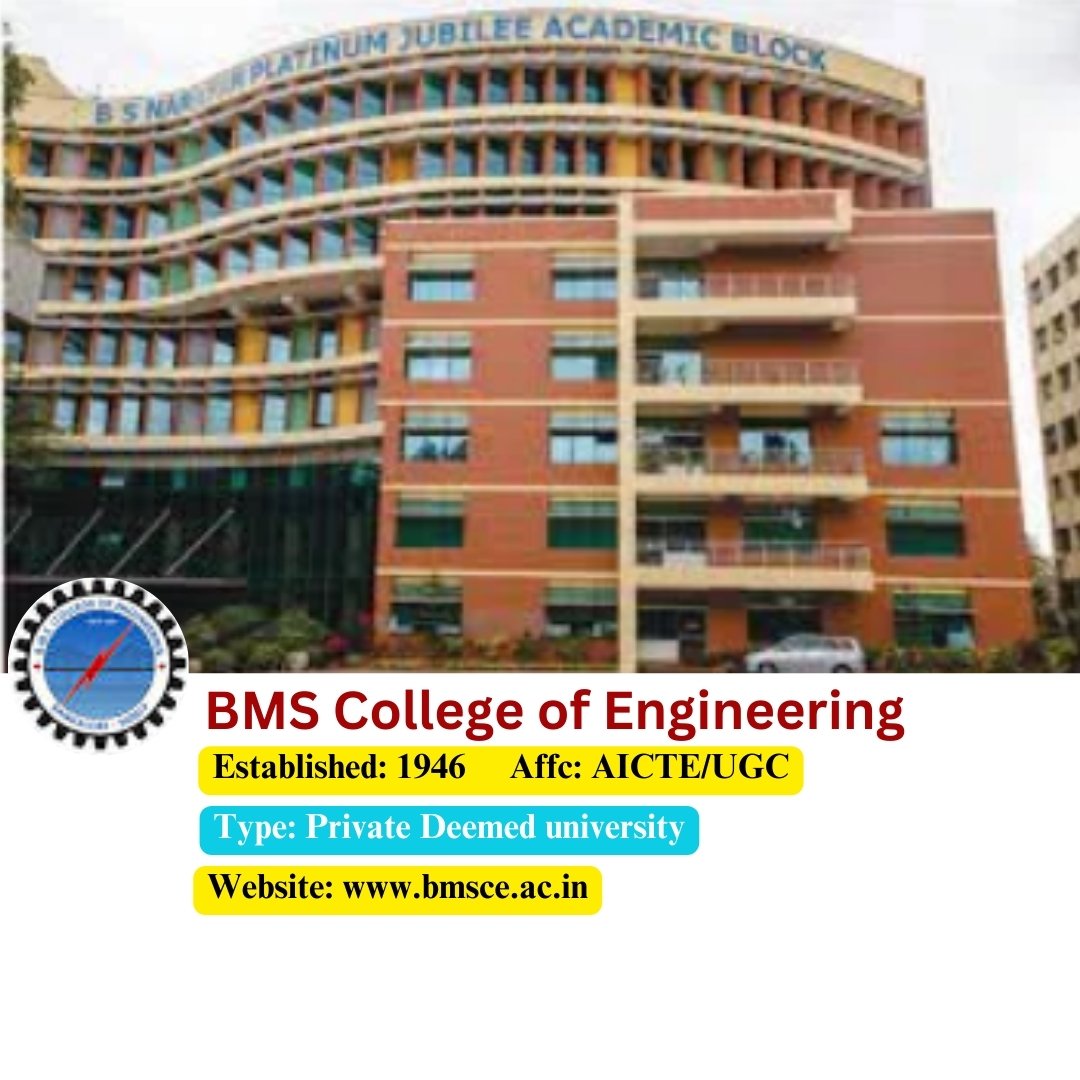
BMS College
BMS College Of Engineering: Courses, Fees, Admission 2025, Cutoff, Placements, Ranking Bangalore, Karnataka Estd 1946 NAAC Grade A++ 3.8

MIT Academy
MIT Academy Of Engineering Alandi: Courses, Admissions 2025, Placement, Scholarships, Fees Pune, Maharashtra Estd 1999 NAAC Grade A

RV College
RV College of Engineering: Admission, Courses, Fees, Ranking, Placement Bangalore, Karnataka Estd 1963

JSS Noida
JSS Noida: Cutoff, Admission 2025, Placement, Fees, Courses Noida, Uttar Pradesh Estd 1998

Jaypee Institute
Jaypee Institute of Information Technology (JIIT Noida): Admissions 2025, Fees, Cutoff, Placements, Courses Noida, Uttar Pradesh Deemed To Be University Estd 2001 NAAC Grade A

Jaipur Engineering
Jaipur Engineering College and Research Centre, Jaipur Jaipur, Rajasthan Estd 2000

IMED Pune
IMED Pune: Fees, Courses, Admission 2025, Cutoff, Placement, Reviews Pune, Maharashtra Estd 1978 NAAC Grade A+

Galgotias College
Galgotias College of Engineering and Technology (GCET): Admission 2025, Fees, Ranking, Cutoff, Course Greater Noida, Uttar Pradesh Estd 2000

Ramaiah Institute
Ramaiah Institute of Technology (RIT): Courses, Fees, Admission, Cutoff, Placement, Ranking Bangalore, Karnataka Estd 1962 NAAC Grade A+

BITS Pilani
BITS Pilani: Admission 2025, Cutoff, Placements, Ranking, Courses Pilani, Rajasthan Deemed To Be University Estd 1964 NAAC Grade A

DIT University
DIT University: Cutoff, Admission 2025, Fees, Placement, Courses, Ranking Dehradun, Uttarakhand Private University Estd 1998

D. Y. Patil College
D. Y. Patil College of Engineering: Courses, Admission 2025, Placement, Reviews Pune, Maharashtra Estd 1984 NAAC Grade A

KIIT
KIIT: Admission 2025, Results, Courses, Fees, Placements Bhubaneswar, Odisha Deemed To Be University Estd 1992 NAAC Grade A++

LNCT Bhopal
LNCT Bhopal: Admission 2025, Placements, Fees, Cutoff, Course, Ranking Bhopal, Madhya Pradesh Estd 1994

Manipal Institute
Manipal Institute of Technology (MIT): Admissions 2025, Courses, Fees, Placements, Ranking Manipal, Karnataka Estd 1957 NAAC Grade A

MIT Academy
MIT Academy Of Engineering Alandi: Courses, Admissions 2025, Placement, Scholarships, Fees Pune, Maharashtra Estd 1999 NAAC Grade A

PES University
PES University: Courses, Fees, Admission 2025, Placements, Ranking, Cut Off Bangalore, Karnataka Private University Estd 1972 NAAC Grade

Sathyabama University
Sathyabama University, Chennai: Courses, Fees, Admission 2025, Placements, Ranking Chennai, Tamil Nadu Deemed To Be University Estd 1987 NAAC Grade A

SRM Engineering College
SRM Engineering College: Courses, Admission 2025, Fees, Placement, Scholarship Kanchipuram, Tamil Nadu Estd 1985 NAAC Grade A++

VIT Vellore
VIT Vellore: Admission 2025 (Open), Rankings, Courses, Fees, Cutoff, Placements, Scholarships Vellore, Tamil Nadu Deemed To Be University Estd 1984 NAAC Grade