
Management with a human purpose
What is an MBA in Healthcare Management?
An MBA in Healthcare Management brings together business administration and the way healthcare organisations work. It develops skills in operations, finance, people management, health policy, service quality and strategy so you can help services function more effectively and responsibly.
The field is broader than running a hospital. It can include health insurance, diagnostic networks, consulting, medical-device businesses, healthcare technology and health programmes. IIHMR, SIHS and GIM each combine management learning with a healthcare context, but their degree titles and course structures differ. [1][2][3]
Hospital management
Patient-service workflows, staffing, procurement, facilities, quality systems and the operational running of a hospital.
Healthcare management
Providers, payers, public-health programmes, consulting, health technology and how organisations work together.
| Level & duration | Postgraduate; typically 2 years full-time in the featured routes |
| Qualification | MBA at SIHS / IIHMR; GIM’s related route is a PGDM, not an MBA degree |
| Entry | Recognised bachelor’s degree; marks, category relaxations and accepted degree modes vary |
| Selection | Institute-accepted entrance score plus its published shortlisting and assessment process |
| Learning | Management core, healthcare domain subjects, field exposure, internship and applied projects |
| Career directions | Operations, quality, consulting, insurance operations, health-tech implementation and health programmes |
Check the programme, not a generic rule
MBA Healthcare Management eligibility.
Medical graduates can benefit from management training, but MBBS is not a universal requirement. The featured programmes allow graduates from different disciplines, subject to their own qualification and selection rules. [1][2][3]
| Programme | Graduation threshold | Important condition |
|---|---|---|
| SIHS · MBA HHM [1] | 50%; 45% for SC/ST | Final-year applicants may apply conditionally. Confirm non-regular UG modes: the FAQ contains restrictions not repeated in the main eligibility panel. |
| IIHMR · MBA Hospital & Health Management [2] | 50%; 45% for SC/ST/OBC-NCL/EWS/PwD | The reviewed 2026 page allows final-year applications subject to documentary evidence by September 2026. Ask for the rule for your intended intake. |
| GIM · PGDM HCM [3] | 50%; 45% for SC/ST | Recognised three-year bachelor’s degree or equivalent. The current FAQ also specifies completion and latest-exam conditions for final-year applicants. |
- Your degree matters: check recognised institution, duration, aggregate calculation and any degree-mode restrictions.
- Category rules differ: an OBC-NCL / EWS / PwD relaxation at one institution does not automatically apply at another.
- Final-year status is conditional: an application permission is not a waiver of final marks or document deadlines.
- Executive study is different: relevant work experience may be required; check the particular programme.
Check a published graduation threshold
A preliminary academic self-check, not a shortlist or admission decision. Inputs are not stored or sent.
Make the right application
Admission process, exams & cut-offs.
There is no single national Healthcare MBA cut-off. Minimum graduation marks, an entrance-score cut-off and the final selection score are different things. Use the current programme bulletin—not an undated prediction—to decide where to apply.
Choose the exact programme and intake
Check MBA versus PGDM, specialisation, campus, residence requirements and admission year. A fee table for 2026–28 does not establish availability for 2027–29.
Verify documents, costs and offer terms
Prepare mark sheets, degree / permitted provisional documents, scorecard, official CGPA conversion and relevant category certificates. Read refund, accommodation and payment conditions before accepting.
Exam links are for research; not every programme accepts every test. IIHMR’s current selection section lists CAT, XAT, NMAT, MAT, CMAT, ATMA, CUET-PG or IIHMRU-MAT for this route. Its GPAT provision is restricted to Pharmaceutical Management. [2]
SNAP registration / payment closes. SIHS institute registration is listed to close on 25 December 2026; programme commencement is 1 June 2027. Dates may change. [1]
The reviewed page lists 25 July 2026 as its last application date. Do not assume admissions remain open; ask about the next intake or an official extension. [2]
Compare the course, not just the campus
Healthcare-management colleges to explore.
Start with verified programme titles and official information. These examples are not a ranking or admission partnership. Evaluate faculty, field exposure, placement roles, total cost and the match to your career goal.
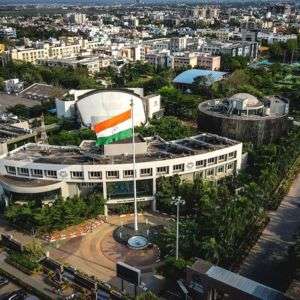
SIHS, Pune
Symbiosis InternationalHospital systems + sector electives
A two-year residential MBA with healthcare IT, health insurance and pharmaceutical-management electives, field learning and internship exposure. [1]
Route: SNAP + institute selection
Published marks: 50%; 45% for SC/ST.
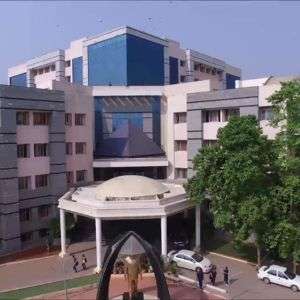
IIHMR University
Jaipur, RajasthanHospital or health-system focus
The two-year programme has a common first year, followed by Hospital Management or Health Management concentrations, plus internship and dissertation work. [2]
Route: accepted test / IIHMRU-MAT + GD-PI
Structure: 6 terms over 2 years.
Goa Institute of Management
Related alternative · PGDM in Healthcare ManagementA two-year residential postgraduate diploma, not an MBA degree. The curriculum spans hospitals, health financing, public health, analytics, healthcare IT, pharmaceuticals and medical devices. It includes experiential projects and a summer internship. [3]
Explore the original guide’s wider college directory (18 listings)
These general directory links are retained for wider research. Inclusion does not confirm a Healthcare Management MBA, current admission availability, a specific campus offering or programme-level placements.
Budget for the complete journey
Healthcare MBA fees: clear, comparable examples.
Separate academic / programme fees from hostel, mess, deposits and other charges. The figures below are institution-specific published examples, not a minimum-to-maximum national fee range.
| Programme & fee basis | Published total | Extra costs / caveats |
|---|---|---|
| SIHS · MBA HHM Academic fees, 2026–28 [1] | ₹12,58,000 ₹3,14,500 × 4 instalments | Institute deposit ₹20,000; hostel deposit ₹20,000; hostel, mess and other applicable costs are separate. |
| IIHMR · MBA Hospital & Health 2026 programme fee schedule [2] | ₹13,50,000 ₹2,70,000 × 5 payments | Hostel charges are additional. Application / test fees and living expenses should be budgeted separately. |
| GIM · PGDM HCM Academic fees, 2026–28 [4] | ₹21,45,000 Published academic total | ₹25,000 caution deposit is listed separately; request the full residential and other-charge schedule. |
Build your two-year education budget
Use a published academic-fee example, then replace the assumptions with your own confirmed figures. Inputs stay on this page.
Academic fees + 24 × monthly living costs + extras. Default living costs and extras are illustrative, not institute quotations. Includes deposits you enter; excludes loan interest and lost earnings. Avoid counting hostel and meals twice.
Scholarships and education loans
Check eligibility, renewal conditions, coverage and the exact award amount. GIM lists a conditional MBBS-specific HCM scholarship; it is not available automatically to every applicant. IIHMR describes an education-loan facility, but sanction and terms remain subject to the lender. [2][4]
Learn the business behind care
MBA Healthcare Management syllabus.
Expect a management core, healthcare-domain subjects and supervised applied work. Current official curricula include hospital operations, health economics, quality and patient safety, digital health, insurance and healthcare information systems. [1][2][3]
The four-semester map below is an indicative guide, not an official university syllabus. SIHS uses semesters; IIHMR and GIM organise learning across six terms / trimesters. Electives, credits and project timing vary.
Semester 1 · Management + healthcare foundations
- Principles of management & organisational behaviour
- Communication and professional ethics
- Managerial economics & health systems
- Marketing and human resource management
- Financial accounting
- Biostatistics / quantitative foundations
Suggested practical output: Map a patient-service journey using a hypothetical or authorised, de-identified scenario.
Semester 2 · Business decisions + service systems
- Strategy and innovation management
- Cost accounting & financial management
- Research methods and quantitative techniques
- Healthcare policy, financing and insurance
- Hospital information systems & records
- Quality, accreditation and patient-safety systems
Suggested practical output: Build a simple service-performance dashboard and explain the meaning and limitations of each metric.
Semester 3 · Operations + applied healthcare
- Essentials of healthcare administration
- Hospital planning, facilities and support services
- Hospital operations & patient experience
- Quality improvement and risk management
- Procurement, inventory and equipment
- Internship / field project / case analysis
Suggested practical output: Study a non-clinical process such as scheduling, discharge coordination or inventory availability under supervision.
Semester 4 · Leadership + integration
- Hospital HR and workforce planning
- Legal and ethical aspects of healthcare
- Revenue-cycle management and insurance operations
- Materials and equipment lifecycle management
- Digital-health strategy and service innovation
- Dissertation, seminars and applied capstone
Suggested practical output: Present a feasible improvement plan with costs, risks, patient-experience implications and evaluation measures.
Hospital focus or health-systems focus?
IIHMR explicitly separates its second-year Hospital Management and Health Management concentrations. Hospital-focused study includes clinical/support-service organisation, facilities and hospital operations; health-focused study adds programme planning, monitoring and evaluation, population studies and public-health systems. [2]
Subjects to check in online or distance routes
These preserve the original guide’s distance-learning subject themes. They are not a universal or separately verified distance-programme syllabus. Check the provider’s actual curriculum and practical-assessment requirements.
A current skill set for healthcare
What to look for beyond the syllabus.
Look for programmes that connect analysis, service design and governance with real organisational problems. Healthcare decisions need to balance cost and efficiency with patient safety, access and experience.
Digital health & analytics
Develop spreadsheet / BI skills, understand hospital information systems and question data quality before drawing conclusions.
Quality & patient safety
Understand quality indicators, process documentation, incident-learning systems and the purpose of accreditation.
Healthcare finance & insurance
Learn budgeting, costing, revenue-cycle processes, claim workflows and the distinction between business and clinical decisions.
People, ethics & service design
Work across clinical and non-clinical teams; understand consent, privacy, accessibility and professional boundaries.
AI in healthcare: use judgment, not just tools
Explore AI-assisted administrative workflows, reporting and forecasting, while checking accuracy, privacy, bias and human oversight. Do not put identifiable patient information into public AI tools. A management project is not permission to automate clinical decisions or bypass organisational approvals.
Match your strengths to the work
Jobs, salary & career progression.
Healthcare managers work across hospitals, clinics, diagnostics, insurance, consulting, health technology, pharma / device businesses and health programmes. Specific roles depend on your experience, technical skills, internships and employer requirements. [1][2][3]
Support scheduling, admissions, discharge coordination, service workflows and performance reporting.
Help maintain process documentation, quality indicators, audits and supervised improvement work.
Analyse service or business data, document requirements and support system or process improvement.
Support claims, billing, authorisations, provider coordination and workflow reporting within role limits.
Support research, market analysis, process assessment and business-case development.
Support implementation, monitoring, reporting and stakeholder coordination in health projects.
Learn workflows, analyse data and deliver reliable support under supervision.
Manage teams, budgets, improvement projects and service performance.
Senior roles require substantial experience, leadership and relevant professional competence.
Salary: use programme-level evidence.
There is no verified national salary figure for every Healthcare MBA graduate. As a transparent example, SIHS’s reviewed programme page displays the following placement-panel figures. [1]
Undated institutional snapshot: checked 28 September 2026. The reviewed panel does not identify the placement cohort. These are not verified 2026-batch outcomes, not an all-India MBA average and not a personal salary promise. Request a dated, programme-specific report before using them for a financial decision. [1]
Recruiters and job titles: verify the exact role
The original guide names Cipla, Apollo Life, Wipro GE Healthcare and Cadila Healthcare. Treat these as historical employer examples to investigate, not a verified current recruiter list for the featured programmes. Ask each placement office for recent employers and actual roles. [7]
Hospital CFO / CEO and pharmaceutical-production leadership are not automatic fresher outcomes. Production roles may require technical qualifications; clinical practice requires separate clinical credentials. Public-sector and government posts follow their own recruitment notices.
Choose the format and the qualification
Full-time, executive, online—or another route?
Pick a format that matches your stage of career and need for practical exposure. Course labels alone do not establish the award, recognition or placement access.
| Study format | Who should explore it? | Check before enrolling |
|---|---|---|
| Full-time, 2-year | Graduates and career-switchers seeking immersive learning, internships and campus access. | Residence requirements, field exposure, supervised projects, actual roles and full cost. |
| Executive / working-professional | Experienced professionals seeking management progression. | Required experience, timetable, employer support, exact award and placement eligibility. |
| One-year / accelerated | Applicants who meet that programme’s specific academic and experience conditions. | Whether it awards an MBA, another degree, diploma or certificate. Do not assume all one-year courses are equivalent. |
| Online / ODL | Learners balancing work, geography or other commitments. | Exact university, programme, mode and session recognition / entitlement; practical assessment and placement access. |
MBA vs MHA vs MPH vs PGDM
MBA in Healthcare Management
Business and management skills applied across healthcare organisations and services.
MHA
A Master of Hospital Administration / related title typically focuses on hospital administration. Entry rules and course emphasis vary.
MPH
A Master of Public Health usually emphasises population health, epidemiology, policy and health programmes.
PGDM in Healthcare
A postgraduate diploma in management. Check applicable approvals and any equivalence needed for further study; GIM is a featured example. [3]
Compare actual modules, practical work and admission rules rather than relying only on the qualification name. None of these management / public-health routes substitutes for a clinical licence.
Turn learning into evidence
Build a healthcare-management portfolio.
Use supervised fieldwork, internships or simulated projects to demonstrate applied thinking. IIHMR and GIM describe two-month summer internships; confirm the exact arrangement and responsibilities for your own intake. [2][3]
Practical-readiness checklist
Tick the pieces you have prepared. Progress stays on this page and resets when you reload.
0 of 6 portfolio pieces prepared
Interview case: outpatient waiting times are rising.
Explain which data you would examine, whose input you need, how you would distinguish scheduling from capacity issues, and how you would test a service improvement without compromising patient safety. Avoid making clinical assumptions outside your competence.
Your questions, answered
MBA Healthcare Management FAQs.
Can a non-medical graduate study Healthcare Management?
Yes. The featured institutions describe entry for graduates from different disciplines, subject to their marks, recognised qualification and selection rules. Medical knowledge can help with context, but MBBS is not a universal prerequisite. [1][2][3]
Does this MBA qualify me to practise medicine?
No. A healthcare-management MBA prepares you for management and related organisational roles. It does not qualify you to diagnose, prescribe or practise medicine. Clinical practice requires the appropriate professional qualification and registration.
What are the Healthcare MBA fees?
For the published schedules reviewed here, SIHS’s 2026–28 academic fees total ₹12.58 lakh and IIHMR’s 2026 programme fee is ₹13.50 lakh. GIM’s related PGDM HCM has a 2026–28 academic fee of ₹21.45 lakh. These are programme-specific examples, excluding additional costs—not a national range or confirmed 2027–29 quotes. [1][2][4]
Is 50% in graduation enough?
It can meet the published general-category marks threshold for the featured programmes, but selection is separate. SIHS and GIM list 45% for SC/ST; IIHMR’s reviewed page extends 45% to SC/ST/OBC-NCL/EWS/PwD. Degree recognition, mode, final-year conditions and entrance / interview requirements still apply. [1][2][3]
Is CAT compulsory for Healthcare Management?
No single exam is compulsory across all institutions. SIHS requires SNAP and separate institute registration. IIHMR accepts its listed national-test scores or IIHMRU-MAT. Confirm the exact programme’s current policy before registering for an exam. [1][2]
What salary can I expect after the MBA?
Outcomes vary by programme, prior experience, role and employer. SIHS’s reviewed website panel shows ₹9 LPA average and ₹7.95 LPA median packages, but does not identify the cohort. Treat this as an undated institutional snapshot, not a verified 2026 outcome or a personal promise. Request dated, programme-specific placement evidence and the fixed / variable pay breakdown. [1]
Can I study while working?
Executive, online and distance formats may suit working professionals, but availability and eligibility vary. Check the exact award, timetable, work-experience requirement and fieldwork. For online / ODL study, verify the university, programme, mode and session through UGC-DEB. [5]
Are hospital management and healthcare management the same?
They overlap, but hospital management is usually more focused on running hospital services, while healthcare management can include insurers, consulting, technology, pharma / devices and health programmes. Compare the actual curriculum: IIHMR, for example, has separate second-year Hospital Management and Health Management concentrations. [2]
Can I apply for 2027 admission using these fee figures?
Use them only as published reference figures. SIHS’s reviewed calendar is for the 2027–29 intake, but the fee table cited here is for 2026–28. Ask each institute for the fee schedule and admission rules for the specific intake you intend to join. [1]
Is an online bachelor’s degree accepted for SIHS?
Do not rely on the marks checker alone. SIHS’s main eligibility panel is broad, while its FAQ lists restrictions for several non-regular degree modes. Ask SIHS admissions to confirm your exact qualification in writing before applying or paying. [1]
Transparent by design
Sources & review notes.
Reviewed on 28 September 2026. Fee batches, admission cycles and placement dates are deliberately separated. Official policies can change; verify the current written information before applying, paying or making an education-loan decision.
- SIHS Pune — MBA Hospital and Healthcare Management ↗2026–28 fees; eligibility; SNAP route; 2027–29 admission calendar; curriculum; undated placement panel.
- IIHMR University Jaipur — MBA Hospital and Health Management ↗Programme structure, eligibility, 2026 admission information, selection and ₹13.50 lakh programme fee.
- GIM — PGDM in Healthcare Management ↗Two-year residential postgraduate diploma; healthcare curriculum, eligibility and learning activities.
- GIM — fees and financial aid ↗PGDM HCM 2026–28 academic fee schedule and additional deposit / scholarship information.
- UGC Distance Education Bureau ↗Programme, mode and academic-session recognition / entitlement; precautions for online and ODL learners.
- National Accreditation Board for Hospitals & Healthcare Providers ↗Healthcare accreditation, standards, patient safety and quality resources. Not an MBA-recognition body.
- Original Search My Colleges Healthcare Management guide ↗Original course coverage, syllabus themes and wider college-directory destinations.
The semester map, project suggestions and calculator assumptions are editorial guidance. This page does not guarantee admission, scholarship, placement, salary or clinical eligibility. The SIHS salary panel is undated and is explicitly labelled as such.