
Make better decisions across the value chain
What is an MBA in Operations Management?
An MBA in Operations Management combines business education with the design, planning and improvement of processes. It can prepare you to understand how organisations use people, materials, information, technology and capital to deliver products and services.
It is not limited to factories or transportation. Operations problems also arise in banking, hospitality, healthcare, retail, e-commerce and technology-enabled services: how to manage capacity, reduce delays, improve quality and deliver consistently.
Match resources to demand
Understand forecasting, procurement, inventory, supplier decisions and capacity.
Design reliable execution
Connect production or service processes, quality, projects, logistics and fulfilment.
Turn evidence into action
Analyse bottlenecks and trade-offs across cost, speed, resilience and customer service.
| Course detail | What to know |
|---|---|
| Level & qualification | Postgraduate management study: a dedicated MBA, an MBA specialisation or a related PGDM/PGDBA route. Confirm the precise award. |
| Duration | Two years is common for featured full-time routes. IGNOU MBAOM permits a minimum of two and maximum of four years. [5][7][9] |
| Entry | A recognised qualifying degree; marks, discipline restrictions, category concessions and final-year conditions depend on the institution. |
| Selection | CAT, SNAP, GMAT and other tests are programme-specific. The reviewed IGNOU MBAOM route has no entrance test. |
| Learning | Management foundations plus operations research, processes, supply chains, quality, technology and programme-dependent projects. |
| Career directions | Planning, procurement, operations analysis, logistics, quality, service operations and process improvement; role level depends on experience. |
Look beyond a generic 50% rule
MBA Operations eligibility.
There is no blanket rule that all IIMs/IITs require 60%, that all Operations MBAs admit every degree, or that every reserved category receives the same marks relaxation.
| Programme / evidence | Academic starting point | What else matters |
|---|---|---|
| IIM Mumbai · MBA OSCM 2026–28 reference [1] | Full-time Engineering/Technology degree, or specified full-time qualifications: MSc Mathematics; MSc Statistics; minimum five-year dual degree in Maths & Computing; minimum four-year BS/BTech Economics. 50%, or 45% for SC/ST/PwD. | The reviewed intake is closed. Final-year candidates were conditional on marks to date and completing examinations/viva by joining. Do not apply the broader general-MBA degree rule to OSCM. |
| SPJIMR · PGDM 2027–29 domestic policy [5] | Recognised bachelor’s/equivalent with at least three years after 10+2 and 50%. Final-year/result-awaiting applicants may apply conditionally. | Freshers and applicants with less than five years of work experience under the reviewed policy. CAT 2026 or qualifying GMAT plus profile/interview selection. Final degree submission deadline: 31 December 2027 for the conditional route. |
| SCMHRD · MBA [7] | Graduate from a recognised university/institution of national importance with 50%; 45% for SC/ST under domestic rules. | Final-year applicants are conditional on the required final result. The SC/ST marks concession is not automatically extended to every other category. SNAP and GE/PI selection apply. |
| IGNOU · MBAOM [9] | Passed bachelor’s of at least three years with 50%, or 45% for eligible reserved-category candidates. | No entrance test under the January 2026 prospectus. A passed degree is required; do not assume pending results qualify. |
Check your academic starting point
Selected Indian-applicant conditions only. This checks a few academic rules, not test scores, profile shortlisting, work experience or admission probability.
Use the institution’s marks-conversion rules. Confirm work-experience, documents and all other conditions separately. No personal details are sent by this tool.
Correct test. Correct programme. Correct year.
Admission process & entrance exams.
Do not mix a closed cohort with a new application cycle.
The reviewed IIM Mumbai page covers a closed 2026–28 MBA OSCM intake. SPJIMR and SCMHRD publish 2027–29 application guidance. IGNOU’s reviewed prospectus requires no entrance test.
[1][4][5][7][9]| Programme | Reviewed route / dates | Action to take |
|---|---|---|
| IIM Mumbai · MBA OSCM | 2026–28 closed; that domestic intake used CAT 2025. [1] | Use it as a historical policy reference, not an invitation to apply now. Obtain the next intake’s official notice before relying on dates or criteria. |
| SPJIMR · PGDM 2027–29 | Application window: 15 September–27 November 2026. CAT 2026 or accepted test-centre GMAT. [4][5] | The domestic policy accepts GMAT tests from 1 January 2024 to 10 December 2026, with official score submission if shortlisted. Application deadline and score-validity deadline are different. |
| SCMHRD · MBA 2027–29 | SNAP 2026: registration/payment closes 25 November 2026. Institute registration/payment closes 12 December 2026. [7] | Register for SNAP and separately select/pay for SCMHRD as required. Final selection uses SNAP and group exercise/personal interaction. |
| IGNOU · MBAOM | No entrance test under the January 2026 prospectus. [9] | Use the current ODL admission portal and the MBAOM programme code. Older OPENMAT dates and cut-offs should not be reused. |
Shortlist the right award
Compare specialist MBA, general MBA with operations electives, PGDM specialisation and flexible diploma routes.
Verify the policy for your intake
Check qualifying degrees, category rules, mode recognition, entrance tests and final-year documentation.
Register for the test and programme
A test registration is not always a completed college application. Track separate forms, fees and deadlines.
Prepare for selection
Develop evidence of analytical thinking, teamwork and problem-solving. Explain why operations fits your goals.
Review the offer before paying
Confirm the full fee schedule, refunds, campus commitments, scholarship terms and any conditional admission requirements.
Find the fit, not just the familiar name
Best colleges for Operations: compare your options.
These four verified programme examples are a practical starting point, not a league table or an endorsement. Compare the exact degree, operations depth, projects, total cost and recruitment evidence.
IIM Mumbai
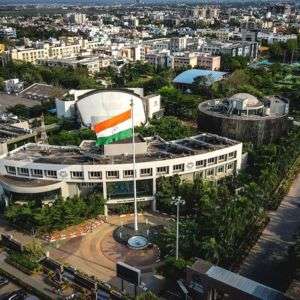
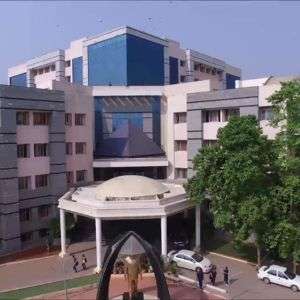
MBA · specialist operations routeA dedicated campus route with operations, supply chain and analytical study. Formerly NITIE; the reviewed 2026–28 admission window is closed. [1][2][3]
SPJIMR, Mumbai
PGDM · Operations & Supply ChainTwo-year residential PGDM with an Operations & Supply Chain specialisation. The award is PGDM, described by SPJIMR as MBA-equivalent—not retitled here as an MBA degree. [5]
SCMHRD, Pune
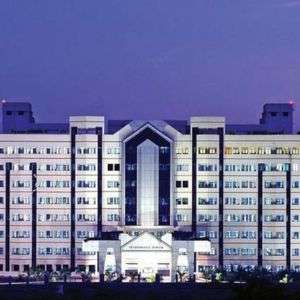
MBA · Operations specialisationTwo-year full-time residential MBA with Operations among its specialisations. Review its SNAP route, electives, industry learning and programme-specific outcomes. [7]
IGNOU
MBA · ODL / distance learningA flexible MBA route for fresh graduates and working learners. Minimum two years, maximum four years under the 2026 prospectus, with project work. [8][9]
Different fee bases are shown; these are not like-for-like all-inclusive prices. Read the exclusions and cohort labels below. [1][6][7][9]
Explore the original college directory (18 listings)
All original destinations are retained for wider research, not as verified providers of a current Operations MBA. Check each institution, campus, programme, specialisation and intake. The original SP Jain directory link is not used as proof of SPJIMR identity; use the official SPJIMR links above.
Budget for the actual programme
MBA Operations fees & cost of study.
A single ₹4–9 lakh fee range does not represent all Operations pathways. Compare the published basis, fee year, inclusions and additional cash requirements.
| Programme / basis | Fee reference | Inclusions, extras and limitations |
|---|---|---|
| IIM Mumbai MBA OSCM 2026–28 section [1] | ₹25,00,000 gross programme fee + ₹50,000 caution deposit | The caution deposit is refundable or adjusted against dues. Mess charges and mess deposit are separate; the page requires one year of mess fees in advance. Confirm the detailed component schedule and any other charges. This is not a 2027 quote. |
| SPJIMR PGDM Indian participants [6] | ₹24,86,000 Indicative; subject to revision | Includes tuition and basic hostel/accommodation. Optional Global Fast Track and international exchange expenses are excluded. Ask about mess, deposits and other items; do not add included basic accommodation twice. |
| SCMHRD MBA 2026–28 table [7] | ₹25,82,000 academics 4 × ₹6,45,500 | Refundable institute and hostel deposits: ₹20,000 each. First-year hostel: ₹1,12,500; mess: ₹59,800 twice. Hostel and mess can rise up to 15% annually; next-year charges are communicated later. Do not label this 2027–29 pricing. |
| IGNOU MBAOM January 2026 prospectus [9] | ₹66,000 programme fees | ₹16,000 in semesters 1, 2 and 4; ₹18,000 in semester 3. Registration/development and applicable examination/project/other charges need separate confirmation; the current portal prevails. |
| SCDL PGDBA · Operations option [10] | ₹81,000 general instalment total ₹49,000 + ₹32,000 | A diploma, not an MBA. Application form ₹1,200 extra; examination, project submission and printed study materials excluded. Temporary one-time-payment discounts are not treated as permanent fees. Verify the current intake quotation. |
Plan a 24-month education budget
Use a fee reference, then replace the assumptions with your own written schedule. This is a planning subtotal—not an invoice or salary/ROI forecast.
IGNOU default: ₹1,000/month and ₹10,000 extras are illustrative study-cost allowances, not official charges. Count only additional expenses. Loan interest, lost earnings and unentered costs are excluded.
Understand the subjects behind the title
MBA Operations syllabus & subjects.
There is no single national four-semester Operations MBA syllabus. The explorer below uses IGNOU’s official MBAOM programme-page course list as a named example—not a syllabus claimed for every college. [8]
Semester 1 · Management foundations
- Management Functions and Organisational Processes
- Human Resource Management
- Business Environment
- Accounting for Managers
- Quantitative Analysis for Managerial Applications
- Marketing Management
- Business Communication
Suggested practice, not an official assessment: Map a simple process and identify its inputs, outputs, stakeholders and measures.
Semester 2 · Business systems & decisions
- Information Systems for Managers
- Management of Machines and Materials
- Managerial Economics
- Social Processes and Behavioural Issues
- Strategic Management
- Business Laws
- Financial Management
Suggested practice, not an official assessment: Compare two capacity or inventory decisions with transparent cost and demand assumptions.
Semester 3 · Operations depth & project
- Research Methodology for Management Decisions
- International Business Management
- Operations Research
- Project Management
- Logistics and Supply Chain Management
- Materials Management
- Project Report · 8 credits
Suggested practice, not an official assessment: Use authorised or synthetic data to investigate a bottleneck, supplier issue or service delay.
Semester 4 · Integration & improvement
- Entrepreneurship
- Total Quality Management
- Business Ethics and CSR
- Operations Management
- Management Information Systems
- Maintenance Management
- International Logistics and Supply Chain Management
Suggested practice, not an official assessment: Build an improvement proposal that considers quality, cost, reliability and implementation risk.
Confirm the current registration scheme with IGNOU: the linked prospectus contains a semester-4 title/code inconsistency. The programme webpage is used here for course titles; the prospectus supports eligibility, duration and fees. [8][9]
| Core / specialist learning area | What to look for in a curriculum |
|---|---|
| Business foundations | Economics, accounting, communication, organisational behaviour, law, strategy and quantitative methods. |
| Operations & production | Process design, production planning/control, capacity, maintenance, quality and service operations. |
| Supply chain & logistics | Demand planning, materials, purchasing, supplier relationships, warehousing, transport and international logistics. |
| Analytics & systems | Operations research, optimisation, business intelligence, forecasting, ERP concepts and management information systems. |
| Electives & applied learning | Programme-specific electives, workshops, cases, internship/summer work, research, seminars and capstone/project work. |
Flexibility should not mean uncertainty
Distance and online Operations Management options.
Separate delivery mode from qualification. An online application does not make a programme an online MBA, and a distance-learning diploma is not automatically an MBA degree.
| Route | Reviewed example / distinction | Questions to ask |
|---|---|---|
| Full-time campus MBA / PGDM | IIM Mumbai, SCMHRD and SPJIMR illustrate different campus pathways. | Can you meet residential/attendance commitments? What operations electives, projects and recruitment evidence apply to that programme? |
| ODL / distance MBA | IGNOU MBAOM: minimum two years, maximum four; English-medium programme; no entrance test under the 2026 prospectus. [8][9] | Where are examinations and learner-support services? What are the assignment, project, re-registration and completion requirements? |
| Flexible postgraduate diploma | SCDL PGDBA includes an Operations option. Two-year programme; four-academic-year registration validity. Graduates and conditional final-year applicants may apply. [10] | Check the exact diploma, current approval, delivery/assessment arrangements, fee quote and whether it meets your employment or further-study goal. |
| Online MBA / executive route | Verify each named programme individually; a university’s brand or an executive certificate is not sufficient evidence of an MBA award. | Is the exact programme and session authorised where applicable? Are there experience, live-class, residency or employer-support conditions? |
If you are a fresher
Prior operations work is not universally mandatory. Compare qualifying-degree requirements, analytical preparation, practical learning and the support offered to early-career candidates.
If you are already working
Compare the timetable with your workload and career direction. Include lost earnings if you leave employment, and ask exactly what career support applies to your chosen mode.
Combine quantitative thinking with practical judgement
Operations skills for today’s workplace.
Data & decision modelling
Build spreadsheet fluency and learn to define metrics. Use SQL, BI or optimisation tools when the problem calls for them—not simply to collect software names.
Process improvement
Map workflows, find bottlenecks, test root-cause hypotheses and design realistic controls. Learn what Lean and Six Sigma methods can—and cannot—establish.
Planning & resilience
Compare demand, capacity, inventory and supplier scenarios. State uncertainty and balance efficiency against service continuity and risk.
Digital operations & ERP
Understand master data, procurement-to-payment and order-to-delivery workflows. Connect systems knowledge to business processes and data quality.
Execution & collaboration
Communicate trade-offs, negotiate responsibly, manage projects and work across sales, finance, suppliers and frontline teams.
Responsible automation
Validate forecasts and AI outputs, protect sensitive supplier/customer data, consider safety and workforce impacts, and keep accountable human oversight.
Connect your skills to the work
MBA Operations careers, scope & salary.
Possible sectors include manufacturing, retail, e-commerce, warehousing, logistics, construction, consulting, financial services, hospitality and IT-enabled services. Availability and role level depend on your programme, experience, skills and the employer.
| Role family | Typical work | Preparation that helps |
|---|---|---|
| Operations / business analyst | Investigate process performance, build reports and support operational decisions. | Metrics, spreadsheets/BI, process mapping and stakeholder communication. |
| Demand / supply planner | Support forecasts, replenishment, capacity and inventory planning. | Forecast evaluation, scenario analysis, inventory logic and coordination. |
| Procurement / sourcing | Compare suppliers, support commercial analysis and manage purchasing processes. | Cost analysis, negotiation, supplier risk and ethical procurement. |
| Logistics / warehouse operations | Coordinate movement, storage, fulfilment and service performance. | Scheduling, inventory accuracy, safety and transport/warehouse systems. |
| Production / service operations | Support delivery, resource allocation, quality and daily process control. | Process analysis, people coordination, capacity and quality methods. |
| Quality / continuous improvement | Investigate variation, defects, delays and opportunities for improvement. | Measurement, root-cause analysis, testing and sustained controls. |
| Project / operations consulting | Support transformation, implementation or cross-functional improvement work. | Problem structuring, analysis, project planning and clear recommendations. |
| Operations / supply chain manager | Lead teams, performance, budgets or networks as responsibilities increase. | Relevant experience, sound judgement and leadership—not an automatic first job. |
How should you compare salary and placement claims?
There is no single guaranteed salary for all Operations MBA graduates. The old page mixed ₹6.5–10 LPA, ₹20–27 LPA and highest-package figures from 2018–20. Those figures do not establish a current, like-for-like expectation for every college or study mode.
Read a relevant report
Check graduating year, exact programme, campus, participating students, median/average CTC and the share of operations roles. An institute-wide number is not an Operations-only result.
Understand the offer
Separate fixed pay, variable pay, bonus, benefits and stock. CTC is not monthly take-home salary; the highest offer is not a typical outcome.
The claim that Operations consistently ranks second for recruitment across all top IIMs and IITs is not retained as a verified fact. Ask for current role descriptions, internship outcomes, programme-level reports and the actual scope of career services. Campus outcomes should not be assumed for online, ODL or executive learners.
Turn concepts into practical evidence
Build your Operations portfolio.
Build work you can explain, not just screenshots. These are suggested practice projects, not official admission requirements or a promise of recruitment.
0 of 6 portfolio pieces prepared
Checklist choices remain local to this page and reset on reload.
Clear answers before you apply
MBA Operations Management FAQs.
What does an MBA in Operations Management cover?
It combines management foundations with process design, capacity, quality, operations research, materials, projects, supply chain, logistics and analytical decision-making. Exact subjects depend on the programme.
Is Operations Management only for engineers?
No. Several routes accept graduates from different disciplines. However, IIM Mumbai’s reviewed 2026–28 MBA OSCM policy restricts qualifying degrees to full-time Engineering/Technology or specific mathematics/statistics/computing/economics qualifications. Its general MBA policy is broader and should not be substituted for OSCM. [1][5][7][9]
Is NITIE now IIM Mumbai?
Yes. The official 2026 brochure identifies IIM Mumbai as erstwhile NITIE. The replacement uses the current institutional name and links to its MBA OSCM information. [2]
Do all IIMs and IITs require 60% graduation?
No blanket rule is valid across every programme. IIM Mumbai’s reviewed MBA OSCM policy uses 50%, or 45% for SC/ST/PwD, with degree restrictions. Other institutions and programmes have their own rules. [1]
Does IGNOU MBA Operations require OPENMAT?
No entrance test is required under the January 2026 MBA specialisation prospectus. MBAOM requires a passed minimum three-year bachelor’s with 50%, or 45% for eligible reserved-category candidates. [9]
What are IGNOU MBAOM’s duration and fees?
Minimum two years and maximum four years. Programme fees total ₹66,000 under the January 2026 prospectus, plus registration/development and applicable other charges. Confirm the current portal before paying. [9]
Is SCDL’s Operations course an MBA degree?
The reviewed SCDL route is PGDBA with an Operations option. It is a postgraduate diploma, not an MBA degree: programme duration two years, registration validity four academic years. It is distinct from SCMHRD’s campus MBA. [7][10]
Which entrance exams should I take?
Match the exam to the exact programme. SPJIMR’s 2027–29 domestic PGDM policy accepts CAT 2026 or qualifying GMAT; SCMHRD uses SNAP 2026. IIM Mumbai’s reviewed closed 2026–28 OSCM intake used CAT 2025. IGNOU MBAOM requires no entrance test in the reviewed prospectus. [1][5][7][9]
Can freshers apply?
Yes, for routes whose academic criteria they meet. Work experience is not universally mandatory. SPJIMR’s 2027–29 policy permits freshers and applicants with less than five years of work experience; final-year entry has separate conditions. [5]
How is Operations different from Supply Chain or Logistics?
Operations studies how processes create and deliver value. Supply chain spans coordinated flows and decisions across organisations; logistics focuses on movement, storage and fulfilment. Programmes often overlap, so compare the actual course list and practical work.
Is a ₹20–27 LPA salary guaranteed after this MBA?
No. There is no common guaranteed package or manager designation. Use dated programme-specific placement evidence, compare fixed pay with CTC and consider the effect of experience, role and location.
Does counseling guarantee admission or placement?
No. Counseling can help compare programmes and plan applications, but institutions decide admission and employers decide recruitment. Verify all offers and payments through official channels.
Know the basis of every comparison
Sources & review notes.
Reviewed 28 September 2026. A live webpage may contain several cohorts: current navigation does not make every fee table or admission notice current for your intended intake.
- IIM Mumbai — admissions, 2026–28 section ↗
MBA OSCM degree restrictions, domestic 50% / SC/ST/PwD 45%, CAT 2025 for the closed 2026–28 intake, and gross programme fee ₹25 lakh plus ₹50,000 refundable caution deposit. Fee modal reviewed in the page HTML; do not confuse it with the old 2025 section.
- IIM Mumbai — MBA brochure 2026 ↗
Identifies IIM Mumbai as erstwhile NITIE and describes its MBA programmes. Used for institutional identity, not an undated ranking or salary claim.
- IIM Mumbai — MBA OSCM curriculum ↗
Core operations, supply chain, data science, AI/ML, purchasing, optimisation, warehousing and logistics; summer project, electives and capstone.
- SPJIMR — PGDM admissions, 2027–29 ↗
Published application window: 15 September–27 November 2026. Institution warns against intermediaries claiming confirmed admission.
- SPJIMR — domestic PGDM eligibility, 2027–29 ↗
Operations & Supply Chain specialisation; recognised minimum three-year bachelor’s with 50%; final-year conditions; CAT 2026 or qualifying test-centre GMAT; freshers and applicants with less than five years of work experience.
- SPJIMR — PGDM fees and scholarships ↗
Indian participant fee ₹24,86,000, indicative and subject to revision, including tuition and basic hostel/accommodation. Optional Global Fast Track/international exchange expenses excluded.
- SCMHRD — MBA with Operations Management specialisation ↗
Two-year residential MBA. Domestic academic rules and SNAP 2026 schedule for 2027–29; fee table explicitly for 2026–28, with academic instalments totalling ₹25,82,000 plus deposits, hostel and mess.
- IGNOU — MBA Operations Management, MBAOM ↗
MBAOM in ODL mode, designed for fresh graduates and working learners. Official course list used for the semester explorer.
- IGNOU — January 2026 MBA specialisation prospectus ↗
Passed minimum three-year bachelor’s, 50% / eligible reserved-category 45%, no entrance test, two-to-four-year duration and ₹66,000 programme fees plus applicable charges.
- SCDL — PG Diploma in Business Administration ↗
PGDBA with Operations option: two-year programme, four-academic-year registration validity, graduate/final-year criteria; displayed general instalments ₹49,000 + ₹32,000, application ₹1,200 and excluded service charges.
- UGC — Distance Education Bureau ↗
Verify exact institution, programme, mode and session where applicable. The regulator explains IGNOU’s statutory exemption from the 2020 ODL/Online regulations.
- Original Search My Colleges Operations Management page ↗
Entire original page fetched in three chunks; topic coverage and all 18 directory destinations preserved, with corrections to outdated/unsupported claims.
Examples are for independent comparison, not rankings, endorsements or affiliation claims. Verify the exact award, recognition, intake, full cost, refunds and selection rules. Interactive tools are informational, not admission or financial decisions.