
Where creativity meets business
What is an MBA in Event Management?
An MBA in Event Management combines business administration with the planning, production and commercial delivery of events. You learn how to turn a client brief into a workable concept, build a budget, coordinate suppliers, market the experience and measure results.
Programmes may be offered as a dedicated Event Management MBA, a Tourism & Event Management MBA or an event specialisation within a broader MBA. Read the exact degree title and curriculum before choosing: these are related routes, not identical qualifications. [1][2][3]
A stronger spotlight on live experiences.
The FICCI–EY 2026 report release records 44% growth in India’s organised live-events segment in 2025. This is industry growth—not a promise of jobs, placements or graduate salaries. [4]
Corporate & MICE
Meetings, incentives, conferences and exhibitions: connect commercial goals with attendee experience.
Weddings & celebrations
Manage client expectations, venues, hospitality, suppliers and multiple moving parts.
Brand experiences
Translate a brand brief into launches, activations and measurable audience engagement.
Live & cultural events
Explore festivals, award shows, fashion events, entertainment and public gatherings.
| Qualification | Postgraduate business degree; confirm the exact specialisation and awarding university |
| Typical duration | 2 years / 4 semesters in the featured full-time routes |
| Entry requirement | Recognised bachelor’s degree; institute-specific marks and selection criteria |
| Core learning | Management, marketing, finance, event planning, production, logistics, client servicing and risk |
| Practical exposure | Look for live projects, internships, supervised event responsibilities and portfolio development |
| Career directions | Event coordination, client servicing, production, sponsorship sales, event marketing and entrepreneurship |
Start with your academic fit
MBA Event Management eligibility.
There is no single marks rule for every college. The programme examples below show why a blanket “40–50%” or “60% for merit admission” rule can mislead applicants.
| Programme example | Published requirement |
|---|---|
| Parul University MBA Tourism & Event Management [1] | Specified recognised UG qualification in a relevant / allied discipline; 50% or equivalent CGPA, 45% for reserved categories under applicable norms. Confirm your degree and category eligibility. |
| SAGE University, Indore MBA (Applied Management) [3] | Graduation with at least 60%, plus qualifying and meeting the SAGE entrance-exam cut-off. This rule belongs to this programme, not all MBAs. |
| NIMS University, Jaipur MBA Event Management [2] | The programme FAQ requires a bachelor’s degree from a recognised university. Ask admissions for the applicable aggregate threshold and selection steps. |
- Any-stream applicants: do not assume you need an event-management bachelor’s degree; check the permitted UG disciplines at the target university.
- Final-year students: apply only if the institute permits it, and confirm result-submission deadlines and provisional-admission rules.
- CGPA conversion: use your university’s official conversion method, not an assumed percentage multiplier.
- Experience: college festivals, volunteering and internships can support an interview, but do not replace formal eligibility.
Check a published marks threshold
A preliminary self-check—not an admission decision. Inputs stay on this page and are not stored or submitted.
Your application roadmap
How to get admission.
Admission may involve an institute-accepted entrance test, academic screening, an interview or another published selection process. Merit-based admission is not available everywhere, and a score in one MBA exam is not valid for every programme.
Shortlist the exact course and campus
Compare the degree title, recognition, event-focused subjects, practical workload and location. Confirm the current intake is accepting applications.
Apply with the right documents
Prepare mark sheets, degree / permitted provisional documents, official CGPA conversion, ID, entrance score if required and relevant category certificates.
Prepare for the interview or group exercise
Practise explaining a client brief, a simple event budget, a vendor problem and how you would handle a last-minute change. Add evidence from projects or volunteering.
Review the written offer before paying
Confirm the complete fee schedule, refund rules, accommodation requirements, internship conditions and which university awards the degree.
Entrance exams: verify before you register
These are official MBA exam portals to explore, not a claim that every featured programme accepts these tests. Exam duration, question types, mode and dates differ; consult the current official bulletin.
Choose programme fit, not just a name
Event Management MBA colleges to explore.
These examples are linked to official programme pages. They are not a ranking, endorsement or admission partnership. Compare the exact award, event-specific teaching, live-project access and total cost.
Parul University
Vadodara, GujaratMBA in Tourism and Event Management
Combines business fundamentals with event planning, destination marketing, hospitality and tourism. The official page describes projects and internships. [1]
Duration: 2 years
Published marks: 50%; 45% for applicable reserved categories.
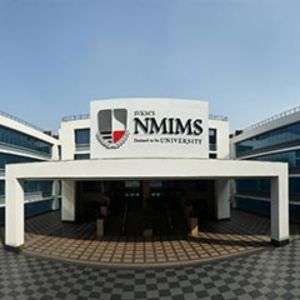
NIMS University
Jaipur, RajasthanMBA in Event Management
Focuses on event strategy, brand experiences, marketing, budgeting, logistics and execution. Live events and internships feature in the programme description. [2]
Duration: 2 years
Published entry: recognised bachelor’s degree; confirm marks and selection.
SAGE University, Indore
Event specialisation within MBA (Applied Management)A broader MBA route with Event Management among the listed specialisations. The official page specifies 2 years, 4 semesters, at least 60% in graduation and the SAGE entrance-exam cut-off. Confirm the specialisation’s availability for your intake and request the current fee sheet. [3]
View official programme ↗Explore more colleges from the original page (18 listings)
Retained for wider research. These general directory links do not confirm an Event Management MBA, current admissions, exact campus specialisation or placement outcomes. Some listings cover institutions outside this field.
Know the full cost
MBA Event Management fees & budget.
There is no verified single fee range that applies to every Event Management MBA. Separate tuition, mandatory academic charges, living costs and hands-on project expenses before comparing offers.
| Programme | Published fee position | What to confirm |
|---|---|---|
| Parul · MBA Tourism & Event Management [1] | ₹2,25,000 per annum. ₹4,50,000 over two years only if the same annual fee applies in both years. | Applicant-specific tuition, annual revision, other mandatory charges, accommodation and project costs. |
| NIMS · MBA Event Management [2] | Request an itemised current quote. Published pricing is linked to tuition concessions and hostel conditions. | Billing period, concession eligibility, room category, residency exceptions and all additional charges. |
| SAGE Indore · MBA Applied Management [3] | Request the current fee schedule. A confirmed fee total was not available in the reviewed programme page. | Event specialisation availability, tuition, entrance / registration costs and experiential-learning charges. |
Plan your two-year MBA budget
Start with the featured tuition example or enter a written college quote. No information is stored or sent.
Tuition + 24 × monthly living costs + extras. Default living costs and extras are illustrative, not college charges. Add travel, event visits, software and required equipment where applicable. Excludes loan interest and foregone earnings; avoid counting hostel and meals twice.
Scholarships: read the conditions
Ask about eligibility, the exact fee component covered, renewal conditions and whether an award is limited to the first year. NIMS publishes conditional scholarship information; a “100% scholarship” headline does not mean every student receives a free MBA. [2]
From concept to curtain call
MBA Event Management syllabus.
A strong programme connects management theory with real production decisions. Expect a business core alongside event planning, finance, marketing, logistics, communication and risk management.
This is an indicative four-semester map adapted from the original guide, with clearer sequencing and practical suggestions. It is not any university’s official syllabus; exact subjects, credits, electives and internship timing vary. [8]
Semester 1 · Management foundations
- Quantitative techniques & managerial economics
- Business communication & negotiation
- Marketing management
- Organisational behaviour
- Principles of event management
- Financial accounting
Suggested practical output: Translate a client brief into an event concept, audience profile and measurable objectives.
Semester 2 · Planning & audience strategy
- Human resource management
- Research methods & applied statistics
- Consumer behaviour & brand management
- IT and digital tools for events
- Event planning & marketing communication
- Financial management
Suggested practical output: Build a venue comparison, supplier shortlist, guest journey and initial budget.
Semester 3 · Production & commercial delivery
- Advertising & event marketing campaigns
- Event production and logistics
- Budgeting, costing & cash-flow planning
- Management information systems
- Sales promotion, sponsorship & brands
- Corporate and social event management
- Internship / supervised live project
- Dissertation or project phase I
Suggested practical output: Create a production schedule, run-of-show, sponsor proposal and vendor responsibility matrix.
Semester 4 · Risk, leadership & applied practice
- Cross-cultural management
- Public relations & media communication
- Culture and entertainment
- Entrepreneurship & business development
- Event risk and contingency management
- Dissertation or capstone phase II
- Internship / project evaluation
Suggested practical output: Present a complete event plan, risk register and post-event impact report.
What a current learning plan should also cover
Hybrid events & event technology
Registration platforms, attendee communication, live-stream coordination and reporting.
Safety, accessibility & privacy
Accessible guest journeys, crowd planning, consent, contingencies and local permissions.
Responsible AI workflows
Use AI for draft concepts and schedules; verify costs, rights, factual claims and feasibility.
Sustainability & measurement
Plan reusable materials and waste reduction; measure attendance, satisfaction and sponsor outcomes.
Make a career, not just an event
Jobs, salary & career progression.
Roles span event agencies, wedding planners, hotels and venues, exhibition organisers, entertainment companies, experiential marketing and in-house corporate teams. An MBA can support your progression, but responsibility grows with demonstrated delivery—not the degree title alone. [1][2]
Support schedules, guest communication, vendor follow-ups and on-ground execution.
Clarify briefs, prepare proposals, coordinate changes and track client approvals.
Coordinate stage, AV, staffing, transport, setup and dismantling with specialist teams.
Build sponsor pipelines, support pitches and track agreed commercial deliverables.
Manage campaigns, registrations, creative briefs, attendee engagement and reporting.
Own budgets, timelines, delivery teams, client relationships and risk decisions.
Learn event operations, client communication and reliable execution.
Take responsibility for a budget, event or client account.
Develop teams, commercial strategy, client relationships and profitable delivery.
A salary benchmark—with the context included.
Indeed reports this figure from 26 salaries, with a page update of 14 February 2026. It is a small-sample role benchmark across experience levels—not an MBA fresher average, take-home guarantee or campus CTC. [5]
For a college decision, ask for the latest programme-specific median and average CTC, placed-student count, eligible cohort size, roles and locations. Separate fixed pay from incentives, travel reimbursements and variable compensation. Freelance billing and agency revenue are not the same as personal salary.
Be ready for the reality of event work
Event delivery can involve evenings, weekends, travel and deadline pressure. Before accepting an internship or job, clarify working hours, safety, travel reimbursement, reporting responsibilities and whether the role is paid.
Show what you can deliver
Build a portfolio before you graduate.
Use a student festival, supervised conference or small community event to practise. Document your own contribution and outcomes accurately; do not present a volunteer role as sole ownership of the event.
Your event-ready portfolio checklist
Tick the work you have prepared. Progress is local to this page and resets when you reload.
0 of 6 portfolio pieces prepared
Interview prompt: the outdoor event has a rain forecast.
Explain how you would evaluate the venue’s fallback plan, communicate with the client, assess supplier commitments and update the schedule. Good answers connect guest safety, budget, responsibilities and decision deadlines—not just creativity.
Choose the right qualification
MBA, diploma or a related master’s?
An MBA is one route into the events industry, not the only route. Pick the qualification that matches your stage, budget and preferred type of work.
| Route | Typical focus | What to verify |
|---|---|---|
| Event-focused MBA | Business management with planning, production and commercial event responsibilities. | Exact degree, awarding university, event modules, supervised projects and internships. |
| MBA Tourism & Event Management | Events combined with tourism, destination marketing and hospitality. | Balance of tourism and events subjects; suitable if you want both fields. [1] |
| MA in PR / events or a related field | May place greater emphasis on communication, media, public relations and cultural contexts. | Actual programme title and curriculum. An MA is not an MBA. |
| PG diploma / certificate | Potentially a shorter, focused training route; scope and depth vary widely. | Provider, award recognition where applicable, duration and practical assessment. Not automatically equivalent to an MBA. |
| BBA / undergraduate route | Foundational study after Class 12, depending on programme eligibility. | Undergraduate admission requirements and future progression. A standalone MBA normally requires graduation. |
Online and distance learning: check more than convenience.
Verify the exact university, programme, mode and academic-session recognition / entitlement on UGC-DEB. Check how an event focus appears on the qualification and how practical work is supervised. A flexible timetable does not replace live-event experience. [6]
Your questions, answered
MBA Event Management FAQs.
What is the duration of an MBA in Event Management?
The featured full-time routes are two-year postgraduate programmes. Four-semester structures are common; confirm the exact academic calendar, internship period and attendance rules with your institution. [1][2][3]
Can I apply after BA, BCom, BSc or BBA?
You do not universally need an event-management undergraduate degree. Parul lists specified recognised undergraduate qualifications with relevant/allied-discipline conditions; NIMS requires a recognised bachelor’s degree. Ask the institution to confirm your exact degree, aggregate and category eligibility. [1][2]
Is 50% in graduation enough for admission?
It depends on the programme. Parul lists 50%, or 45% for applicable reserved categories, subject to its qualification conditions. SAGE Indore’s MBA Applied Management page lists 60% plus its entrance cut-off. Meeting a marks threshold is not a guarantee of selection. [1][3]
Is CAT compulsory? Can I get direct admission?
CAT is not a universal requirement. Each institute decides its published selection route. SAGE’s Applied Management programme explicitly requires its university entrance-exam cut-off. A direct or merit route is valid only where the target institution actually permits it; do not assume that every college offers one. [3]
How much does an MBA in Event Management cost?
Costs vary by programme and location. Parul’s MBA in Tourism and Event Management page displays ₹2.25 lakh per year; ₹4.50 lakh is a two-year planning calculation if that annual fee remains unchanged. Applicant-specific tuition, living costs and other charges must be confirmed. Request an itemised fee schedule for other programmes. [1]
What salary can I expect after the MBA?
There is no single verified MBA Event Management fresher salary. Indeed’s Event Manager page reports ₹28,134 monthly average base salary from 26 salaries, updated 14 February 2026; that is a small-sample role-level benchmark across experience levels, not a graduate placement figure. Use dated, programme-specific placement reports when comparing colleges. [5]
Do event internships matter?
Yes—practical work is central to understanding clients, suppliers, budgets, timings and on-ground delivery. Parul and NIMS describe internships or live-event learning. Ask who supervises the work, what responsibility you receive, what costs are involved and how performance is assessed. [1][2]
Can I start an event-management business after graduation?
You can explore entrepreneurship, but a degree alone does not make a business profitable. Develop client acquisition, costing, contracts, vendor networks, insurance awareness, cash-flow planning and reliable delivery. Start with work you can safely scope and execute; billings are not the same as profit.
Can I do this MBA after Class 12?
Not as a standard standalone postgraduate MBA. First complete an eligible recognised bachelor’s degree. After Class 12, explore a suitable BBA or other undergraduate programme; integrated programmes, where offered, have their own entry and progression rules.
Transparent by design
Sources & review notes.
Reviewed on 28 September 2026. Official programme pages inform course, fee and eligibility details; the salary benchmark has its own earlier update date. Reconfirm fees, specialisations, selection rules and deadlines before applying or paying.
- Parul University — MBA in Tourism & Event Management ↗Programme title, duration, displayed annual fee, eligibility, experiential learning and curriculum links.
- NIMS University — MBA in Event Management ↗Dedicated programme, bachelor’s-degree requirement, live-event learning and fee / accommodation terms.
- SAGE University Indore — MBA (Applied Management) ↗Event Management specialisation, 60% graduation threshold and SAGE entrance requirement.
- FICCI–EY — Media & Entertainment report release, 24 March 2026 ↗Organised live-events segment grew 44% in 2025. Sector growth is not a graduate placement or salary measure.
- Indeed India — Event Manager salary ↗Role-level salary benchmark: ₹28,134/month; 26 salaries; page updated 14 February 2026.
- UGC Distance Education Bureau ↗Programme / mode / session recognition and entitlement information; student precautions.
- SAGE MBA (Applied Management) structure, 2025–27 batch ↗Examples of management core, skill electives and internship requirements; not a universal 2026 syllabus.
- Original Search My Colleges Event Management guide ↗Original coverage, semester topics and wider college-directory destinations.
The semester map, portfolio tasks and budgeting assumptions are editorial guidance. Industry growth does not establish graduate employability. No admission, scholarship, job, salary or government placement is guaranteed.