
A bigger perspective on business
What is an MBA?
MBA stands for Master of Business Administration. It is a postgraduate management degree that brings together finance, marketing, people management, operations, strategy and decision-making. Many programmes combine broad foundations with electives, specialisations, internships or projects.
India’s management-education landscape includes university MBA degrees, IIM programmes and autonomous business-school diplomas. A familiar college name is only the starting point: compare the exact award, curriculum, mode, eligibility and intake.
| MBA course highlights | What to expect |
|---|---|
| Duration | Two years is common for full-time programmes. Experienced-professional, part-time and flexible formats can have different timelines. |
| Entry | A recognised qualifying degree is the usual starting point. A prior BBA, commerce degree or matching specialisation is not universally required. |
| Admission | Programme-specific entrance scores and selection, or a published non-test route. Test eligibility is not the same as admission eligibility. |
| Common exam pathways | CAT, XAT, SNAP, CMAT, MAT, NMAT, GMAT and state/institutional routes—only where the chosen programme accepts them. |
| Study formats | Full-time, part-time/executive, online and open/distance learning; compare their practical commitments and exact qualification. |
| Career directions | Consulting, finance, marketing, HR, operations, analytics, product, sales, banking and entrepreneurship. |
Why consider an MBA?
A stronger business toolkit
Develop analysis, communication, project-management and strategic thinking through a programme’s actual teaching and assessments.
Learning with other people
Build relationships with classmates, faculty and alumni. Access and value depend on participation, format and the institution.
Space to explore a direction
Use electives, projects and internships to test an interest before committing to a role or industry.
A platform—not a guarantee
An MBA can support a career transition or entrepreneurship, but does not guarantee a salary increase, leadership title or successful venture.
Know what is open—and for which intake
MBA admission dates & entrance exams.
Status snapshot: 28 September 2026. This is a dated planning guide, not a live admission feed or a claim that every college is accepting applications. Many tests held in 2026 lead to programmes starting in 2027.
CAT 2026
22 September 2026New registration ended at 5 pm IST. The payment-only extension to 24 September was for already-registered candidates, not fresh applications. [1]
Test: 29 November 2026XAT 2027
6 December 2026XLRI’s reviewed schedule lists this closing date. Select the required programmes and verify the rules for your applicant category. [4]
Test: 3 January 2027SNAP 2026
25 November 2026Test and programme applications are separate. For example, SCMHRD’s institute deadline is 12 December 2026. [6]
Tests: 13, 19 & 26 December 2026SPJIMR PGDM
27 November 2026Published window: 15 September–27 November 2026. Domestic routes include CAT 2026 or qualifying test-centre GMAT. [7]
Programme starts: June 2027| Entrance / pathway | How to use it in your shortlist |
|---|---|
| CAT | Check the individual IIM or participating non-IIM programme, test cycle, sectional requirements and separate institute applications. A qualifying percentile does not guarantee an interview. |
| XAT | The reviewed XLRI BM/HRM route uses XAT for Indian applicants. International categories and the experienced-professional GM programme have different routes. [4] |
| SNAP | For the SIU MBA programmes covered by SNAP. Register/pay for the test and each chosen programme; a test score alone is not a completed college application. [5] |
| GMAT | Accepted only where a programme permits it. SPJIMR’s 2027–29 policy specifies test-centre exams and a score-validity window; read those details before booking. [8] |
| CMAT, MAT, NMAT & state tests | Verify the latest session and accepting programme. Examples to research include MAH MBA/MMS CET, TANCET and KMAT; do not assume all versions/campuses accept the same test. |
| Non-test / merit route | Some programmes use a published non-test route. IGNOU’s reviewed ODL MBA handbook requires no entrance test, but degree and marks conditions still apply. [13] |
A practical admission process
Define your target
Choose the career direction, study mode, location and realistic budget you want to compare.
Check eligibility and the exam route
Read the exact programme policy, degree restrictions, category rules and accepted test year.
Complete each required application
Track test and institute forms separately. Save receipts, score-report instructions and document deadlines.
Prepare for selection
Institutions may use interviews, writing tasks, group exercises, academic history or experience. Do not assume every college uses GD/WAT/PI in the same way.
Review the offer and conditions
Check final-year documents, full fees, refund rules, scholarships and recognition before paying.
Academic minimums are only the starting point
MBA eligibility in India.
There is no universal marks threshold based on a college’s “tier”. Category concessions, accepted degrees, final-year conditions and work-experience requirements depend on the exam and programme.
| Reference | Published academic starting point | Conditions / limitations |
|---|---|---|
| CAT 2026 · bachelor’s route [3] | 50%; 45% for SC/ST/PwBD. General, EWS and NC-OBC use 50%. | Final-year/result-awaiting candidates may apply conditionally. Separate professional-qualification routes exist. Registration is closed; this is an academic-policy reference, not an application invitation. |
| SPJIMR PGDM · 2027–29 [8] | Recognised bachelor’s/equivalent with at least three years after 10+2 and 50%. | Conditional final-year route; awarded degree due by 31 December 2027. Freshers and applicants with less than five years of work experience under the reviewed policy. |
| IIT Delhi MBA · 2026–28 reference [10] | Minimum three-year bachelor’s with 60% / 6.00 CGPA; 55% / 5.50 for SC/ST/PwD, on a 10-point scale or accepted equivalent. | Historical cohort, not a 2027 admission notice. Final-year conditions apply. The checker below uses the percentage route only. |
| IGNOU MBA · ODL [13] | Passed minimum three-year bachelor’s: 50%, or 45% for eligible reserved-category candidates. | No entrance test in the linked handbook; minimum two years, maximum four years. Confirm the current session and category policy. |
| SCMHRD MBA · domestic rules [6] | Recognised graduation: 50%, or 45% for SC/ST. | Final-year candidates conditional on required final results. PwD seat reservation does not automatically mean the same marks concession as SC/ST. |
Check an academic starting point
For Indian bachelor’s-route applicants. Selected academic rules only—not full eligibility, an entrance-score predictor or admission probability.
Use official percentage-conversion rules. Professional/overseas qualifications, work experience, documents and test cut-offs are not assessed. Inputs are not sent or stored.
Choose for your goals, not just a name
MBA colleges in India: build your shortlist.
The original guide names the 14 institutions below. Retained here as research starting points, this is not a numbered ranking, exhaustive national list or claim that applications are open. Compare their exact programmes and current official policies. [15]
| Institution | Location | Programme-level research |
|---|---|---|
| IIM Ahmedabad | Ahmedabad | Official website / admissions ↗ |
| IIM Bangalore | Bengaluru | Official website / admissions ↗ |
| IIM Calcutta | Kolkata | Official website / admissions ↗ |
| IIM Lucknow | Lucknow | Official website / admissions ↗ |
| IIM Kozhikode | Kozhikode | Official website / admissions ↗ |
| IIM Indore | Indore | Official website / admissions ↗ |
| FMS Delhi | New Delhi | Official website / admissions ↗ |
| XLRI | Jamshedpur | Official website / admissions ↗ |
| SPJIMR | Mumbai | Official website / admissions ↗ |
| MDI Gurgaon | Gurugram | Official website / admissions ↗ |
| IIFT | Delhi / Kolkata | Official website / admissions ↗ |
| IIT Delhi DMS | New Delhi | Official website / admissions ↗ |
| IIT Bombay SJMSOM | Mumbai | Official website / admissions ↗ |
| IIT Kharagpur VGSoM | Kharagpur | Official website / admissions ↗ |
Search the original college directory
These 25 original listings are wider research links—not a verified list of current MBA providers or open admissions. Some destinations focus on other qualifications. Check campus, current MBA offering, award and intake before applying.
25 directory listings
No matching listing. Try a shorter college name or clear the search.
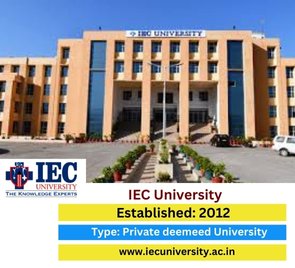
The malformed IEC URL was repaired to its existing internal listing. Historical “2025 Open” labels, copied descriptions and unsupported accreditation claims are not carried forward as current facts. The SP Jain directory destination is not proof of SPJIMR identity. [15][16]
Related guide: Explore the site’s MBA college guide ↗
Compare the full cost—not just tuition
MBA fees in India & your study budget.
These four sourced fee references illustrate different routes; they are not a national fee range, ranking or like-for-like all-inclusive comparison. Match the cohort, applicant category and inclusions.
IIT Delhi DMS
MBA · campus routeOther institute charges and living costs are separate. The reviewed admission material covers 2026–28, not a new 2027 quotation. [10]
Read source and fee notes →IIM Mumbai
MBA · campus routePlus ₹50,000 refundable caution deposit; mess charges and mess deposit separate. That intake is marked closed. [11]
Read source and fee notes →SPJIMR, Mumbai
PGDM · residential routeTuition and basic hostel/accommodation included; optional Global Fast Track and exchange expenses excluded. Subject to revision. [9]
Read source and fee notes →IGNOU
MBA · ODL / distance route₹16,000 in semesters 1, 2 and 4; ₹18,000 in semester 3. Registration/development and applicable other charges extra. [12][13]
Read source and fee notes →Build a 24-month planning budget
Choose a fee reference and edit the assumptions. This is a cost subtotal—not an institutional quote, loan calculation or salary/ROI forecast.
IIT Delhi default: ₹15,000/month and ₹75,000 extras are illustrative, not quoted charges. Use a written category-specific fee where appropriate. Excludes loan interest, lost earnings and unentered costs.
Scholarships, financing and opportunity cost
Verify scholarship eligibility, renewal and payment timing before deducting an award. Compare loan interest, processing charges and moratorium terms. If you leave work, include lost earnings in your decision. Neither a degree nor a past placement average guarantees affordability.
Choose the work you want to understand
MBA specialisations: explore your direction.
Use your interests and target roles to narrow the field. A label may describe a dedicated degree, a PGDM specialisation or a set of electives. No college is assumed to offer every option below.
Finance
Financial analysis, corporate finance, banking and investment-related learning.
Explore related guide →Marketing
Customer insight, sales, branding, channels and marketing strategy.
Compare current programme electivesHuman Resources
Talent, learning, rewards, employee relations and people strategy.
Explore related guide →Operations
Processes, quality, supply chain, production and service delivery.
Explore related guide →Business Analytics
Data-led business decisions, modelling and business intelligence.
Explore related guide →International Business
Cross-border business, trade and international management.
Compare current programme electivesIT & Technology
Information systems, technology-enabled processes and management.
Explore related guide →Healthcare Management
Health-service operations, administration and organisational decisions.
Explore related guide →Entrepreneurship
Opportunity assessment, venture models, finance and execution.
Compare current programme electivesDigital Marketing
Digital channels, customer journeys, measurement and campaign strategy.
Explore related guide →Oil & Gas Management
Energy-sector management, commercial context and industry operations.
Explore related guide →Event Management
Event planning, budgets, vendors, execution and client experience.
Explore related guide →From foundations to real decisions
MBA syllabus & learning experience.
This is an indicative learning map, not a national syllabus or a promised semester order. Colleges use semesters or terms and revise electives. Check the current handbook before enrolling.
Learning area 1 · Foundations
- Managerial economics and business environment
- Financial/management accounting
- Organisational behaviour and management concepts
- Quantitative methods and research
- Business communication, law and ethics
Preparation idea: Practise reading a financial statement, analysing a small dataset and presenting a clear business recommendation.
Learning area 2 · Core functions
- Marketing and consumer behaviour
- Financial management
- Human resources and performance
- Operations and operations research
- Strategy and management information systems
Preparation idea: Connect decisions across functions: a pricing, staffing or capacity choice affects more than one department.
Learning area 3 · Electives
- Finance: investments, control systems or financial services
- Marketing: services, channels or brand strategy
- HR: learning, talent or rewards
- Technology, e-business or business analytics
- International business or entrepreneurship
Preparation idea: Choose a coherent set of electives around a role or problem you want to understand; availability varies.
Learning area 4 · Applied learning
- Internship or industry work where provided
- Cases, simulations and group assignments
- Project, dissertation or capstone where required
- Presentations, negotiation and stakeholder communication
- Responsible data use and evidence-based judgement
Preparation idea: Build a documented project with clear assumptions, reliable data, limitations and practical next steps.
The original subject coverage is retained as a broader learning map rather than a universal four-semester promise. Compare named official course structures, such as IGNOU’s MBA programme and the curriculum linked by IIT Delhi. [10][12][15]
Fit study around your circumstances
Full-time, executive, online or distance MBA?
| Format | What to investigate | A useful decision question |
|---|---|---|
| Full-time campus | Attendance/residency, internships, fees, cohort and programme-specific recruitment. | Can I commit the time and fund the total cost, including opportunity cost? |
| Part-time / executive | Actual award, experience requirements, timetable, employer support and campus sessions. | Does the programme address the next step in my career without conflicting with work? |
| Online MBA | Exact programme/session entitlement, live/recorded delivery, assessments and career services. | Can I meet the actual schedule, and is the qualification suitable for my goal? |
| ODL / distance MBA | Self-learning materials, support centres, assignments, exams and completion windows. | Do I have a reliable independent study routine and access to required examinations? |
Before starting: set realistic expectations
- Build comfort with spreadsheets, quantitative reasoning, accounting basics and clear writing.
- Expect case preparation, group work, feedback and independent study—not only classroom lectures.
- Use projects and internships to test career assumptions and build evidence of your skills.
- Treat networking as genuine relationships and contribution, not guaranteed access to jobs.
- An institution can provide opportunities; your effort, prior experience and market conditions also influence outcomes.
- Keep learning after graduation. A degree and practical experience can complement each other; neither makes future success automatic.
Evaluate outcomes with context
MBA placements, salaries & career opportunities.
The original career areas remain useful, but “manager” is not an automatic first designation. Your role depends on experience, skills, internships, employer needs and the programme’s actual opportunities.
| Career area | Examples to investigate |
|---|---|
| Consulting | Analyst / consultant; business problem-solving and change work. |
| Finance | Financial, credit, investment or corporate-finance analysis, depending on skills and role requirements. |
| Marketing | Market research, brand, channel and marketing roles; management scope grows with responsibility. |
| HR | Talent, HR operations, learning, rewards and employee-relations work. |
| Operations | Planning, supply chain, service/production operations and process improvement. |
| Analytics | Business/data analysis and decision support, with appropriate technical preparation. |
| Product management | Product analysis, coordination or management depending on experience and employer expectations. |
| Sales & business development | Client development, account roles, sales planning and commercial execution. |
| Banking | Relationship, credit, banking operations or other institution-specific roles. |
Read the right placement report
Use the exact graduating year, programme and campus. Check median and average CTC, participant numbers, role mix and domestic versus international offers.
Separate salary from a headline
CTC can include variable pay, bonuses, benefits or stock. The highest offer is not typical and is not the same as monthly take-home pay.
Assess return on investment with your full cost, financing, foregone earnings and realistic role scenarios—not simply by dividing a highest package by tuition. An MBA can help build capability, but it does not remove career uncertainty.
Make every application intentional
Your MBA shortlist & application checklist.
Turn the original college-selection advice into a concrete checklist. Tick each step as you complete your research; this is your own preparation tracker, not an institutional assessment.
0 of 6 application-planning steps completed
Selections remain local to this page and reset on reload. Do not upload personal documents to an unverified intermediary.
Answers before you make a commitment
MBA colleges & admissions FAQs.
Are MBA admissions open everywhere right now?
No. This guide is reviewed as of 28 September 2026. CAT 2026 registration is closed; the reviewed XAT, SNAP and SPJIMR schedules relate to 2027 entry. Each institution and programme has its own window. Check the latest official notice. [1][2][4][6][7]
Was CAT 2026 registration extended to 24 September?
No. The official release extended only fee payment for candidates already registered by 22 September 2026. It expressly said there was no new-registration extension. Both dates are before this guide’s review date. [2]
Do I need a BBA or a degree in the same subject?
Not universally. The reviewed CAT bachelor’s route, SPJIMR PGDM and IGNOU MBA permit broader qualifying-degree backgrounds. Some specialist programmes restrict disciplines, so read the specific policy. [3][8][13]
Is 50% graduation enough for every MBA?
No. CAT’s bachelor’s route uses 50%, or 45% for SC/ST/PwBD; IIT Delhi’s reviewed 2026–28 MBA policy uses 60% or the accepted CGPA route, with a different concession for SC/ST/PwD. Eligibility and competitive shortlisting are separate. [3][10]
Can final-year students apply?
Many programmes allow conditional applications, but required marks, completion certificates and deadlines vary. IGNOU’s reviewed handbook requires a passed degree. Do not assume a common provisional-admission rule. [3][8][13]
Is work experience compulsory?
Not for every route. SPJIMR’s reviewed 2027–29 PGDM policy permits freshers and candidates with less than five years of work experience. Experienced-professional programmes may require a minimum; verify the exact award and cohort. [8]
Is a PGDM the same title as an MBA?
No. MBA is a degree title and PGDM is a diploma title. A particular PGDM can have recognised equivalence for specified purposes—SPJIMR describes its featured PGDM as MBA-equivalent—but that does not make every diploma equivalent. Verify what your goal requires. [8]
Can I study an MBA without an entrance test?
Some programmes publish a non-test route. IGNOU’s linked ODL MBA handbook specifies no entrance test, but requires a passed minimum three-year bachelor’s with the stated marks. This is not permission to bypass another institution’s selection process. [13]
Which MBA specialisation is best?
There is no universal winner. Compare the work you want to do, your interests and skills, the available curriculum, practical exposure and relevant career evidence. General management with suitable electives can also be useful.
Does an MBA guarantee a high salary or management role?
No. Assess programme-specific placement data and the full cost of study. Prior experience, skills, internships, role availability and employer decisions all matter; CTC is not take-home pay.
Are online and distance MBAs automatically recognised?
Check the exact institution, programme, mode and academic session where applicable, not only the university brand. UGC-DEB provides verification information and explains IGNOU’s statutory position. Also confirm suitability for your intended employer or further study. [14]
Does free counseling guarantee admission?
No. Counseling can help organise research and applications. Institutions make admission decisions and employers make hiring decisions. Use official payment channels and reject guaranteed-seat claims.
Clear sources. Clear limitations.
Sources & review notes.
Reviewed 28 September 2026. Admission dates are a snapshot, not automatically refreshed. Fee years, programme titles and policy limitations are labelled; an “Apply now” button alone does not establish current eligibility or an open window.
- CAT 2026 — official portal ↗
Registration deadline 22 September 2026, 5 pm IST; examination 29 November 2026. Registered-candidate login is not a new-registration window.
- CAT — media release, 22 September 2026 ↗
Payment-only extension until 24 September 2026, 5 pm, exclusively for already-registered candidates; expressly no extension of new registration.
- CAT 2026 — eligibility ↗
Bachelor’s route: 50%, or 45% for SC/ST/PwBD; final-year conditions. Separate professional-qualification routes exist. Meeting minimum eligibility does not guarantee IIM shortlisting.
- XLRI — XAT 2027 / programme admissions ↗
Registration closes 6 December 2026; XAT on 3 January 2027. Indian BM/HRM applicants use XAT; other applicant/programme routes differ.
- SNAP 2026 — official portal ↗
Tests on 13, 19 and 26 December 2026 for selected SIU programmes and 2027–28 entry. Test registration and programme registration/payments are separate.
- SCMHRD — SNAP and MBA 2027–29 schedule ↗
Published SNAP registration/payment deadline 25 November 2026; SCMHRD deadline 12 December 2026. Domestic MBA eligibility: 50%, or 45% for SC/ST.
- SPJIMR — PGDM applications 2027–29 ↗
Application window 15 September–27 November 2026. Merit-based admission; no management quota or guaranteed-admission intermediaries.
- SPJIMR — domestic PGDM eligibility 2027–29 ↗
Minimum three-year bachelor’s with 50%, conditional final-year applications, CAT 2026 / qualifying test-centre GMAT, and less-than-five-years work-experience condition.
- SPJIMR — PGDM fees ↗
Indian fee ₹24,86,000, indicative and subject to revision; tuition/basic hostel included, optional GFT/international exchange excluded.
- IIT Delhi DMS — MBA admissions and tuition ↗
Reviewed 2026–28 admission policy: minimum three-year bachelor’s, 60% / 6.00 CGPA or SC/ST/PwD 55% / 5.50. Published full-programme tuition ₹12 lakh; other charges separate. Not a 2027 notice.
- IIM Mumbai — admissions and fee schedule ↗
2026–28 MBA section is closed. Gross programme fee ₹25 lakh plus ₹50,000 refundable caution deposit; mess charges/deposit separate. Older 2025 and international sections are not mixed into this figure.
- IGNOU — MBA, ODL programme ↗
General MBA offered through ODL, programme overview and link to its current student handbook.
- IGNOU — linked general MBA handbook ↗
Pages 17 and 21: passed minimum three-year bachelor’s, 50% / eligible reserved-category 45%, no entrance test, two-to-four-year duration, ₹66,000 programme fees plus applicable charges. The PDF is not presented as a confirmed 2027 fee quote.
- UGC — Distance Education Bureau ↗
Verify programme/mode/session recognition or entitlement where applicable. The regulator explains IGNOU’s statutory exemption from the 2020 ODL/Online regulations.
- Original Search My Colleges MBA page ↗
Full page fetched in three chunks. Course topics, 14 named college references and 25 directory listings retained; stale admission labels and unsupported blanket rules corrected.
- IEC University — repaired internal directory destination ↗
Existing internal IEC page verified as the replacement for the original malformed link. This is a directory-link repair, not official validation of all claims on that listing.
No ranking, affiliation, admission or placement guarantee is implied. Verify every programme, fee, approval, deadline and refund policy directly. Local tools provide limited information, not official eligibility, admissions or financial decisions.